

Warm hearts and cold cash

Curated by Brian Kim, CPA — every pick gets a plain-English summary and the key takeaways.
Brian Kim, CPA · 2.89M YouTube Subscribers →What this book actually teaches
- 01Money in families functions as a medium of power, love, control, and resentment — Millman's interviews reveal how financial arrangements encode deeper relationship dynamics.
- 02Inheritance is treated as an emotional event: moderate sums can rearrange stable sibling relationships and reveal unequal parental valuation that had been hidden for decades.
- 03Financial dependency in marriage creates practical vulnerability and internalized obligation; the book anticipates the later literature on financial abuse without using that framing.
- 04The book describes and categorizes patterns across families — it does not prescribe how to fix money conflicts, which limits its practical utility.
- 05The sample skews middle and upper-middle class, and the 1991 publication date means the economic context for women's financial independence is dated.
What's in this book
Marcia Millman's central argument in Warm Hearts and Cold Cash is that money in families is rarely a neutral resource — it is a medium of power, love, control, resentment, and obligation. Drawing on interviews with more than a hundred people across a wide range of family structures, Millman, a sociologist at UC Santa Cruz, examines how financial arrangements between parents, children, siblings, and spouses encode the deeper dynamics of those relationships. Who gives, who receives, who feels entitled, and who feels guilty reveals more about a family's emotional architecture than almost anything else.
The book is organized by relationship type rather than by financial category. Chapters cover inheritance expectations and how parents use money to reward or punish adult children; the dynamics of unequal financial support between siblings; how financial dependency in marriage shapes power between spouses; how adult children support aging parents — and the resentments that accumulate when that care is unequally distributed; and how money functions as a substitute for emotional connection in families where direct affection is unavailable. Millman's methodology is sociological rather than therapeutic: she reports patterns across her interview subjects rather than prescribing fixes, letting the range of experiences build a picture of how money and family emotion intersect across American households.
One of the book's most useful contributions is its treatment of inheritance as an emotional rather than a financial event. Millman documents how the death of a parent can rearrange family relationships that had been stable for decades — siblings who cooperated for years splitting over what turned out to be modest sums, children discovering for the first time that they were not equally valued by the parent who claimed to love them all the same. The money makes visible what the relationships had always contained.
A second strand is financial dependency in marriages: Millman examines both the practical vulnerability it creates and the ways spouses on the receiving end internalize obligation and shame. The book predates the mainstream conversation about financial abuse, but the dynamics it describes anticipate that literature.
The natural audience is adults who have experienced money conflict in their family of origin or in a marriage and want a sociological lens for understanding those conflicts as patterned rather than idiosyncratic — and readers interested in the social psychology of family dynamics more broadly.
The weaknesses are worth acknowledging. The book was published in 1991 and reflects the economic and social context of that period; women's financial independence, dual-income households, and the demographics of inheritance have all shifted since. The interview sample, while large, is not random, and Millman acknowledges that she overrepresents middle and upper-middle class families. The book describes and categorizes; it does not prescribe. Readers wanting advice on how to handle a difficult inheritance conversation or renegotiate financial arrangements in a marriage will need to look elsewhere. The academic framing occasionally flattens the emotional texture of individual stories.
Worth reading for anyone trying to understand why money conversations in families feel so charged — and for the recognition that the pattern you experienced in your family of origin has parallels in thousands of other households.
Read next

For anyone whose financial education was "get a good job and save" — the book is most valuable for first-time readers…
Buy on Amazon →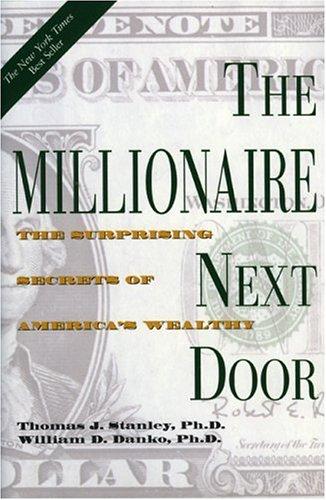
For anyone who confuses high income with wealth, or who feels behind because their lifestyle doesn't look like the we…
Buy on Amazon →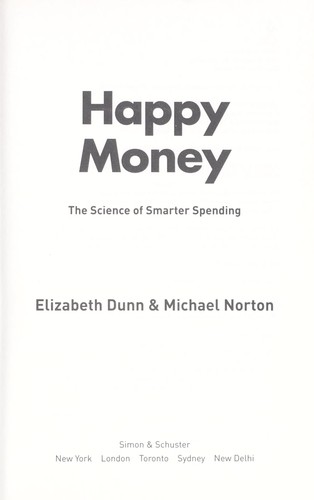
Anyone who earns enough to make discretionary spending choices but suspects their spending is not generating proporti…
Buy on Amazon →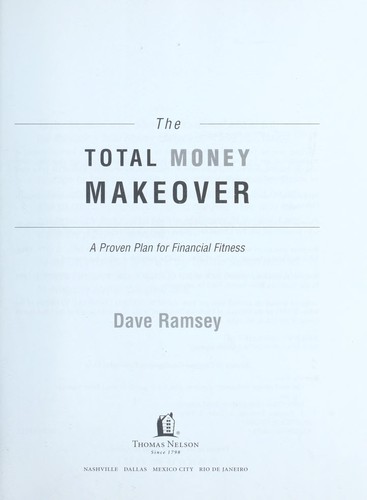
Households in active consumer-debt distress who need a non-negotiable shared script. Not for investors already past B…
Buy on Amazon →About Marcia Millman
Read more from Marcia Millman and explore the full bibliography on ClearValue Books.
View Marcia Millman's page →Get an email if our take on Warm hearts and cold cash changes.
We re-review our picks. We'll email you if Warm hearts and cold cash's ranking or review changes — no checking back.
Across the site
Featured in lists

Ready to read Warm hearts and cold cash?
Buy the edition we recommend on Amazon.
Buy on Amazon →