

Whatever Happened to Thrift?

Curated by Brian Kim, CPA — every pick gets a plain-English summary and the key takeaways.
Brian Kim, CPA · 2.89M YouTube Subscribers →What this book actually teaches
- 01The American savings rate decline from ~10% in the 1970s to near zero by the mid-2000s is explained not primarily by income stagnation but by three interacting forces: erosion of thrift cultural norms, the structural shift from defined-benefit to defined-contribution retirement plans, and systematic psychological biases including present bias and mental accounting.
- 02Wilcox's assessment of financial education is clear-eyed and evidence-based: programs that change defaults — particularly automatic 401(k) enrollment — consistently outperform programs that change information, including financial literacy classes.
- 03The shift from defined-benefit to defined-contribution retirement plans transferred savings responsibility to individuals at exactly the moment when consumer credit became cheap and pervasive, compounding the savings-decision burden on the least equipped decision-makers.
- 04The book was published at the start of the 2008 financial crisis, giving its central concern immediate relevance — though it predates subsequent behavioral economics policy work including Thaler and Sunstein's Nudge, which covers much of the same territory with more policy depth.
- 05Cultural norm erosion — the replacement of a social ethic that treated saving as virtuous and debt as shameful with a consumption norm — is addressed descriptively rather than with tight causal analysis, which is the book's primary analytical weakness.
What's in this book
Whatever Happened to Thrift? (2008) by Ronald Wilcox — a professor of business administration at the University of Virginia's Darden School — is an academic-accessible examination of why Americans save so little and what, if anything, can be done about it. The book was published at the beginning of the financial crisis, which gave its central concern immediate relevance: the United States personal savings rate had declined from roughly 10% in the 1970s to nearly zero by the mid-2000s, and the consequences were becoming visible in real time.
Wilcox's core argument is that the savings collapse is not primarily explained by income stagnation or economic hardship, but by a combination of structural changes in the financial environment and systematic psychological biases that those changes exploited. The book proceeds across three explanatory layers. The first is cultural: Wilcox traces the erosion of what he calls the "thrift ethic" — the social norm that treated saving as virtuous and debt as shameful — through the postwar consumer credit expansion and the marketing infrastructure that replaced saving norms with consumption norms. The second is structural: the shift from defined-benefit to defined-contribution retirement plans transferred savings responsibility from institutions to individuals at exactly the moment when consumer credit became cheap and pervasive. The third is psychological: Wilcox draws on behavioral economics research — including work on present bias, mental accounting, and the pain of saving relative to the pleasure of spending — to explain why rational individuals consistently undersave even when they understand the long-term costs.
The policy section is the book's most distinctive contribution. Wilcox evaluates a range of savings-promotion interventions — automatic enrollment in 401(k)s, matched savings accounts, financial education programs, and consumption taxes — with more analytical rigor than most popular treatments. His assessment of financial education is particularly clear-eyed: the evidence that education alone changes savings behavior is weak, and programs that change defaults (automatic enrollment) outperform programs that change information (financial literacy classes).
The weaknesses are primarily about timing and depth. The 2008 publication date means the book predates the post-crisis savings recovery and the subsequent behavioral economics policy work that expanded on its themes — Richard Thaler and Cass Sunstein's Nudge (published the same year) addresses much of the same territory with more policy detail. Wilcox's treatment of the cultural dimension is more descriptive than analytical; the question of why thrift norms eroded when they did is addressed in broad strokes rather than with the specificity the topic deserves.
For readers interested in the intersection of behavioral economics, policy analysis, and savings behavior — particularly those who want a historically grounded account of why the American savings rate collapsed — this book provides a well-organized and readable introduction that holds up reasonably well despite its pre-crisis framing.
Read next

For anyone whose financial education was "get a good job and save" — the book is most valuable for first-time readers…
Buy on Amazon →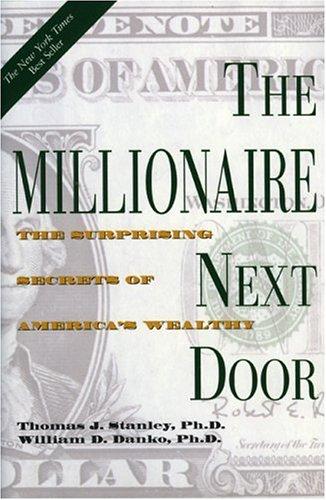
For anyone who confuses high income with wealth, or who feels behind because their lifestyle doesn't look like the we…
Buy on Amazon →
Anyone who earns enough to make discretionary spending choices but suspects their spending is not generating proporti…
Buy on Amazon →
Households in active consumer-debt distress who need a non-negotiable shared script. Not for investors already past B…
Buy on Amazon →About Ronald Wilcox
Read more from Ronald Wilcox and explore the full bibliography on ClearValue Books.
View Ronald Wilcox's page →Get an email if our take on Whatever Happened to Thrift? changes.
We re-review our picks. We'll email you if Whatever Happened to Thrift?'s ranking or review changes — no checking back.

Ready to read Whatever Happened to Thrift??
Buy the edition we recommend on Amazon.
Buy on Amazon →