

Why people buy things they don't need

Curated by Brian Kim, CPA — every pick gets a plain-English summary and the key takeaways.
Brian Kim, CPA · 2.89M YouTube Subscribers →What this book actually teaches
- 01Discretionary purchases are driven by emotional and psychological needs — what Danziger calls "motivators" — not the functional justifications consumers articulate at point of sale.
- 02The gap between justifier (what consumers say) and motivator (what they actually need) is where marketing strategy lives — and where personal finance self-examination should start.
- 03Satisfaction from discretionary spending is more durable when the purchase serves social connection or identity-building than when it serves mood regulation.
- 04The book is written for marketers; personal finance readers must invert the lens to use it as a tool for understanding their own spending psychology.
- 05The 2004 publication predates e-commerce dominance and the experience economy; the specific consumer categories and data are dated, but the motivational framework is more durable.
What's in this book
Pamela N. Danziger's argument in Why People Buy Things They Don't Need is that discretionary consumer spending — purchases of products and experiences that go beyond functional necessity — is driven by emotional and psychological needs that standard marketing models understate. Danziger, a consumer researcher and founder of Unity Marketing, draws on large-scale survey data from American consumers to map what she calls the "fantasy, feeling, and fun" drivers behind purchasing decisions in categories from home furnishings to gardening to entertainment to personal indulgence.
The book is organized around Danziger's proprietary consumer research, which tracked over 1,000 American households across multiple survey waves to identify purchase patterns, stated motivations, and the emotional needs that purchases were fulfilling. Each chapter addresses a different product category — home, garden, apparel, gifts, travel, collecting, personal care — and presents the research findings on who buys, how much they spend, what triggers purchases, and what emotional need the purchase is serving. Danziger's framework identifies what she calls "justifiers" — the rationalizations consumers use to make discretionary spending feel responsible — and "motivators," the underlying emotional drivers. The gap between justifier and motivator is where marketing opportunity lives.
For personal finance readers, the most useful application of the research is mirror-directional: understanding what emotional needs are actually being served by discretionary spending gives you a more accurate tool for evaluating your own purchasing patterns than a simple budget category analysis. Danziger's research on the relationship between income, discretionary spending, and reported satisfaction is also practically useful — the data consistently show that satisfaction from discretionary purchases is more durable when the purchase serves social connection or identity-building rather than mood regulation.
The book is primarily written for marketers and brand managers rather than personal finance readers; each chapter ends with marketing implications and targeting recommendations. The personal finance application requires the reader to invert the marketing lens. Danziger is helping marketers understand what motivates consumers so they can sell more effectively — a reader using this book for financial self-understanding is reading against the grain of its intended use.
The weaknesses are significant. The consumer research is proprietary to Unity Marketing, and Danziger does not provide the granular methodology detail that would allow independent evaluation of the survey design, sampling, or statistical rigor. The book was published in 2004, and the consumer categories it examines — home decor, garden, gift shops, physical entertainment — predate the dominant role of e-commerce, digital subscriptions, and the experience economy in discretionary spending. The marketing language and framework are dated for current consumer behavior. And the U.S. household survey data reflects the economic conditions of the early 2000s, including income distributions and housing costs that have shifted substantially.
Worth reading for marketers and brand strategists who want a research-grounded framework for understanding discretionary purchase motivation. Personal finance readers will find it useful as a mirror — a tool for understanding the real emotional drivers behind their own non-essential spending — but should not expect a how-to guide for changing those patterns.
Read next

For anyone whose financial education was "get a good job and save" — the book is most valuable for first-time readers…
Buy on Amazon →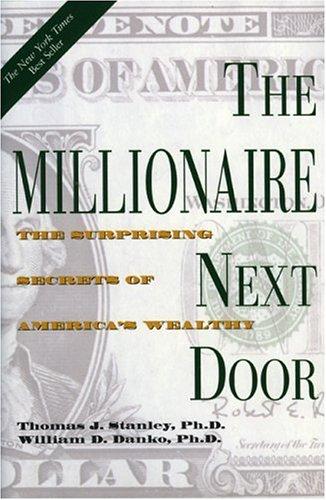
For anyone who confuses high income with wealth, or who feels behind because their lifestyle doesn't look like the we…
Buy on Amazon →
Anyone who earns enough to make discretionary spending choices but suspects their spending is not generating proporti…
Buy on Amazon →
Households in active consumer-debt distress who need a non-negotiable shared script. Not for investors already past B…
Buy on Amazon →About Pamela N Danziger
Read more from Pamela N Danziger and explore the full bibliography on ClearValue Books.
View Pamela N Danziger's page →Get an email if our take on Why people buy things they don't need changes.
We re-review our picks. We'll email you if Why people buy things they don't need's ranking or review changes — no checking back.

Ready to read Why people buy things they don't need?
Buy the edition we recommend on Amazon.
Buy on Amazon →