

Why Smart People Make Big Money Mistakes - And How to Correct Them

Curated by Brian Kim, CPA — every pick gets a plain-English summary and the key takeaways.
Brian Kim, CPA · 2.89M YouTube Subscribers →What this book actually teaches
- 01Mental accounting — treating money differently depending on its source or designated purpose — is presented as a root cause of financial errors including overspending tax refunds, maintaining separate savings and high-interest debt simultaneously, and inconsistent valuation of identical amounts.
- 02Loss aversion, drawn from Kahneman and Tversky's prospect theory, explains why investors hold losing positions too long and sell winners too early — losses feel roughly twice as painful as equivalent gains feel good, distorting rational portfolio management.
- 03The book covers anchoring bias, the sunk cost fallacy, overconfidence, and herd behavior with specific counterstrategies — including pre-commitment savings devices and decision rules designed to interrupt automatic cognitive responses at the point of financial decision-making.
- 04Co-author Thomas Gilovich collaborated with Daniel Kahneman at Cornell, giving the book direct connection to the research base that would later win Kahneman the Nobel Prize — a credibility anchor that distinguishes it from popular finance books drawing on the same ideas more loosely.
- 05The 1999 publication date means the behavioral finance literature has expanded considerably since; readers seeking deeper treatment of prospect theory or policy implications of behavioral economics will find later books in the tradition more comprehensive.
What's in this book
Why Smart People Make Big Money Mistakes — and How to Correct Them (1999) by Gary Belsky and Thomas Gilovich is a popular introduction to behavioral economics applied to personal finance, written before behavioral economics had become mainstream vocabulary. Belsky, a journalist, and Gilovich, a Cornell psychology professor and collaborator with Daniel Kahneman, drew on the then-emerging field of behavioral finance to explain why intelligent, educated people consistently make predictable and costly financial errors — not because they lack information, but because the cognitive architecture that produces generally good judgment in everyday life produces systematic errors in financial decision-making.
The book organizes its content around specific cognitive biases with demonstrated financial consequences. Mental accounting — the tendency to treat money differently depending on its source or designated purpose — receives extended treatment, with Belsky and Gilovich explaining why people will drive across town to save $10 on a $25 item but not on a $2,500 item, and why "found money" from tax refunds or bonuses gets spent more readily than earned income. Loss aversion — the finding, associated with Kahneman and Tversky's prospect theory, that losses feel roughly twice as painful as equivalent gains feel good — is presented as a root cause of a range of financial errors including holding losing investments too long, selling winning investments too early, and paying for unnecessary insurance coverage.
The book covers anchoring bias (the tendency to give disproportionate weight to the first number encountered in a negotiation or valuation), the sunk cost fallacy (continuing to invest in a losing position because of what has already been spent), overconfidence in one's own financial judgment, and the herd behavior that drives speculative bubbles. For each bias, the authors describe the experimental evidence, explain the mechanism, and offer specific strategies for counteracting it — including rules of thumb like the 10/10 test for purchases ("Would I regret not buying this in 10 minutes? 10 months?") and pre-commitment devices for savings.
The 1999 publication date is both the book's strength and its primary limitation. Written before the dot-com collapse, it has historical value as a document of the behavioral finance insights available to investors just before the era's most dramatic demonstration of those insights in action. The specific examples have aged — the book references CDs and cash-value life insurance products in ways that reflect late-1990s financial market conditions — but the underlying psychology has not. The behavioral finance literature has expanded considerably since 1999, and readers who want deeper treatment of prospect theory, dual-process cognition, or the policy implications of behavioral economics will find later books in the tradition more comprehensive.
For general readers who want an accessible, evidence-grounded introduction to why financial behavior so frequently diverges from financial rationality, this remains a solid and readable entry point — particularly for investors who recognize their own patterns in the bias descriptions and want concrete strategies to counteract them.
Read next

For anyone whose financial education was "get a good job and save" — the book is most valuable for first-time readers…
Buy on Amazon →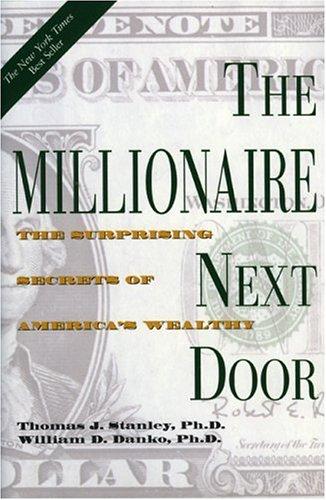
For anyone who confuses high income with wealth, or who feels behind because their lifestyle doesn't look like the we…
Buy on Amazon →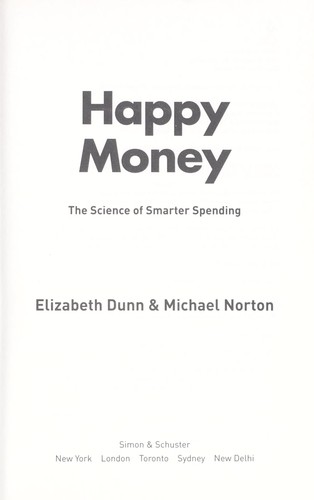
Anyone who earns enough to make discretionary spending choices but suspects their spending is not generating proporti…
Buy on Amazon →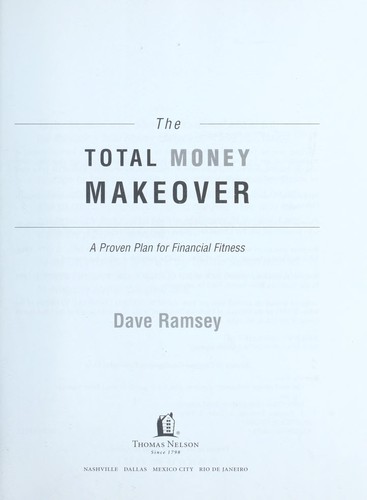
Households in active consumer-debt distress who need a non-negotiable shared script. Not for investors already past B…
Buy on Amazon →About Gary Belsky
Read more from Gary Belsky and explore the full bibliography on ClearValue Books.
View Gary Belsky's page →Get an email if our take on Why Smart People Make Big Money Mistakes - And How to Correct Them changes.
We re-review our picks. We'll email you if Why Smart People Make Big Money Mistakes - And How to Correct Them's ranking or review changes — no checking back.

Ready to read Why Smart People Make Big Money Mistakes - And How to Correct Them?
Buy the edition we recommend on Amazon.
Buy on Amazon →