

Winning the money game

Curated by Brian Kim, CPA — every pick gets a plain-English summary and the key takeaways.
Brian Kim, CPA · 2.89M YouTube Subscribers →What this book actually teaches
- 01The primary financial risk for professional athletes is not market volatility or advisor incompetence — it is social pressure from family, entourages, and community members who position themselves around newly wealthy athletes and create expectations that compound lifestyle inflation.
- 02Foyle's career finitude framework is the book's most transferable insight: NBA and NFL careers average three to five years, so income that appears extraordinary per-year becomes less so when normalized across a 40-year retirement — a model applicable to any professional with a compressed high-earning window.
- 03The book identifies specific investment categories athletes encounter disproportionately — real estate development deals, restaurant and bar ventures, sports-adjacent business opportunities — and provides red-flag criteria for evaluating each.
- 04Foyle's recommended alternative is straightforward: index funds, diversified public market portfolios, and delayed real estate purchases until career security is established — advice that is appropriately conservative for a professional class with finite, variable income.
- 05The social dynamics analysis is unusually honest about the cultural pressures that make wealth preservation difficult for athletes; readers who want to understand the non-financial dimensions of sudden wealth management will find this book more useful than purely financial treatments.
What's in this book
Winning the Money Game (2011) by Adonal Foyle — a 12-year NBA veteran who played for the Golden State Warriors, Orlando Magic, and Memphis Grizzlies — is a personal finance guide anchored in the specific financial hazards of professional athletes. Foyle's central argument is that the pattern of professional athletes acquiring significant wealth and losing it quickly is not primarily caused by bad luck or intelligence deficits, but by a predictable set of financial decisions made under specific social pressures that the athletes' financial education left them unprepared to navigate. The book draws on Foyle's own experience managing an NBA salary, his work with the National Basketball Players Association, and his academic background — he earned a master's degree in political science from Colgate University.
The book's structure maps the lifecycle of a professional athlete's financial exposure. The early chapters address the immediate financial decisions that occur at contract signing: the pressure to immediately upgrade lifestyle, the family and social network expectations that large contracts generate, and the agents, financial advisors, and hangers-on who position themselves around newly wealthy athletes. Foyle is direct about the predatory dynamics that surround young athletes with sudden wealth — the "entourage" phenomenon, the investments pitched by acquaintances, the family members who feel entitled to a share of the income — and frames these social pressures as the primary financial risk rather than market risk or advisor incompetence.
The middle section addresses the specific investment products and schemes that professional athletes encounter with unusual frequency: real estate development deals pitched by community members, restaurant and bar ventures proposed as lifestyle investments, and sports-adjacent business opportunities that exploit the athlete's name recognition. Foyle's analysis is practical: he identifies the red flags in each category and explains the alternative strategies — index funds, diversified public market portfolios, delayed real estate until career security is established — that have better risk-adjusted outcomes for athletes with finite earning windows.
The career finitude chapter is one of the book's most useful contributions. NFL and NBA careers average three to five years; income that appears extraordinary on a per-year basis becomes less so when divided across a 40-year retirement. Foyle's framework for thinking about career-length income normalization is directly applicable to any professional with a compressed high-earning window — entertainers, executives with large but variable compensation, or anyone whose income will decline significantly in mid-career.
The book's weaknesses are primarily about audience breadth. The content is calibrated for professional athletes and those advising them; general personal finance readers will find the social dynamics sections less directly applicable, though the underlying financial principles — avoid lifestyle inflation, resist investment pitches from social networks, understand career income normalization — are universal. The investment advice is appropriately conservative but not particularly sophisticated; readers looking for detailed portfolio construction guidance should look elsewhere.
For professional athletes, their families, or advisors who work with them, the book provides more practically grounded guidance on the specific hazards of sudden wealth than most general personal finance guides. The social dynamics analysis is unusually honest about the cultural pressures that make wealth preservation difficult for athletes in ways that purely financial books miss.
Read next

For anyone whose financial education was "get a good job and save" — the book is most valuable for first-time readers…
Buy on Amazon →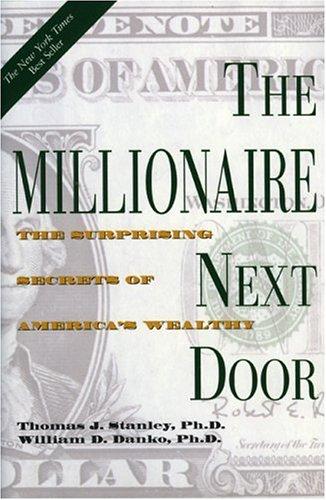
For anyone who confuses high income with wealth, or who feels behind because their lifestyle doesn't look like the we…
Buy on Amazon →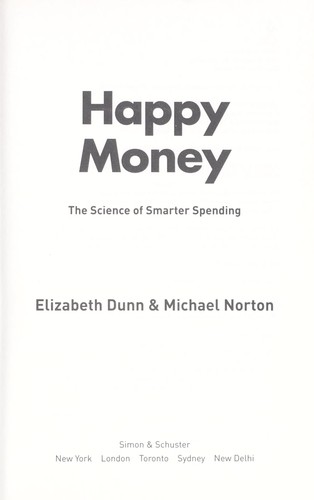
Anyone who earns enough to make discretionary spending choices but suspects their spending is not generating proporti…
Buy on Amazon →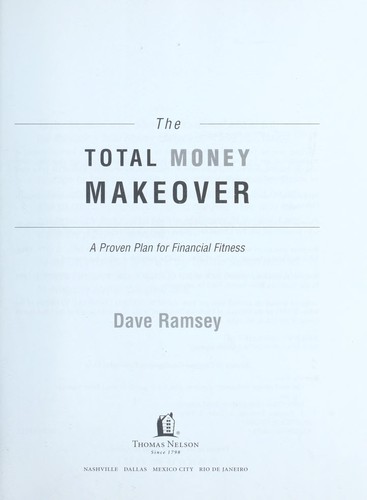
Households in active consumer-debt distress who need a non-negotiable shared script. Not for investors already past B…
Buy on Amazon →About Adonal Foyle
Read more from Adonal Foyle and explore the full bibliography on ClearValue Books.
View Adonal Foyle's page →Get an email if our take on Winning the money game changes.
We re-review our picks. We'll email you if Winning the money game's ranking or review changes — no checking back.

Ready to read Winning the money game?
Buy the edition we recommend on Amazon.
Buy on Amazon →