

You can have it all

Curated by Brian Kim, CPA — every pick gets a plain-English summary and the key takeaways.
Brian Kim, CPA · 2.89M YouTube Subscribers →What this book actually teaches
- 01Patent's framework holds that abundance is the natural condition and scarcity is a mental construct — financial lack reflects an inner misalignment rather than an objective external condition, so the primary remedy is inner-work practices rather than financial planning tools.
- 02The practical guidance consists of gratitude practices, affirmations, and exercises in releasing fear and resistance — there is no budgeting, saving, investing, or debt reduction content; readers who need those tools need a different book.
- 03The unified metaphysical frame covers career, relationships, health, and finances as reflections of the same inner dynamic — the book's coherence comes from this single-frame approach, which is also its limitation for readers wanting domain-specific guidance.
- 04The tone is contemplative rather than motivational — Patent writes in the New Thought tradition but without the high-pressure achievement framing typical of the genre, which is the primary reason the book has retained a following among readers who find conventional self-help too driven.
- 05The metaphysical premise — that inner state determines outer results — is assumed rather than argued; readers who do not share the New Thought framework's foundational premises will find the book's logic circular rather than persuasive.
What's in this book
You Can Have It All by Arnold M. Patent, published in 1995, is a spiritual self-help book that frames material abundance — including financial abundance — as a natural byproduct of inner alignment rather than external effort. Patent, an attorney who left his legal practice to teach personal transformation workshops, argues that the universe is inherently abundant, that scarcity is a mental construct rather than an objective condition, and that the beliefs, fears, and resistance people carry are the primary barriers to receiving the prosperity that is, in his framework, already available to them.
Patent's core framework holds that every person is naturally deserving of abundance across all life domains — financial, relational, physical, creative — and that the experience of lack reflects a misalignment between the person's inner state and this natural condition of abundance. The path to having it all, in Patent's treatment, is not strategic planning, skill development, or financial discipline but rather the release of limiting beliefs, fears, and emotional patterns that block the experience of what is already there. The book draws on New Thought philosophy — the tradition that includes Napoleon Hill's Think and Grow Rich and the broader Law of Attraction literature — without explicitly anchoring itself in that tradition.
The chapters on money are organized around the premise that money is a reflection of inner state rather than a product of external circumstances. Patent's argument is that people who experience financial lack are broadcasting a frequency of scarcity through their beliefs, emotions, and focus — and that the remedy is not more income or better budgeting but a shift in inner state toward gratitude, trust, and openness. The practical guidance that follows from this is experiential rather than financial: gratitude practices, affirmations, exercises in releasing fear and resistance, and attention to what Patent calls the natural flow of energy in one's life.
The relationship between outer results and inner state is the book's consistent frame across all domains. Career, relationships, health, and finances are all addressed as reflections of the same inner dynamic — and the guidance for improving any of them runs through the same inner-work practices. This unified framework is the book's coherence; it is also its primary limitation for readers who want domain-specific guidance rather than a universal metaphysical account.
The writing is accessible and calm in register — Patent does not use high-pressure motivational language or aggressive goal-setting frameworks. The tone is closer to contemplative teaching than to personal development coaching, and the book's primary appeal has historically been to readers who find conventional achievement-oriented self-help too driven and disconnected from wellbeing.
This is for readers who are drawn to the spiritual dimension of prosperity — who believe or are open to the belief that inner state and outer circumstance are connected — and who find the conventional financial planning approach addressing the wrong layer of the problem.
The weaknesses are applicability and evidence. The book provides no financial planning guidance — no budgeting, saving, investing, debt reduction, or tax strategy — and readers whose financial difficulties involve concrete material shortfalls (income below expenses, significant debt, inadequate retirement savings) will find the inner-work focus insufficient as a standalone response. The metaphysical premise that scarcity is primarily a mental construct is not examined critically; the book assumes rather than argues this foundation. Readers outside the New Thought tradition will find the framework unconvincing, and the book makes no accommodation for that skepticism. The 1995 publication date is not a significant factor here since the book is not making empirical or market-specific arguments.
For readers who are already oriented toward the New Thought / Law of Attraction framework and want a calm, accessible articulation of how those principles apply to financial and material abundance, You Can Have It All delivers that clearly — though it is not a financial planning guide and should not be read as a substitute for one.
Read next

For anyone whose financial education was "get a good job and save" — the book is most valuable for first-time readers…
Buy on Amazon →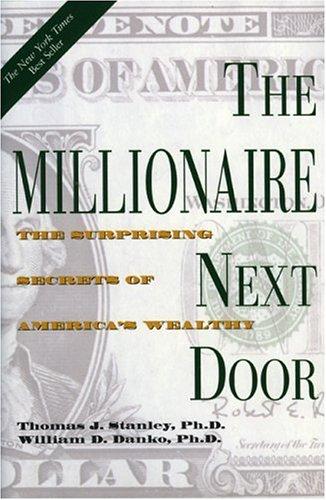
For anyone who confuses high income with wealth, or who feels behind because their lifestyle doesn't look like the we…
Buy on Amazon →
Anyone who earns enough to make discretionary spending choices but suspects their spending is not generating proporti…
Buy on Amazon →
Households in active consumer-debt distress who need a non-negotiable shared script. Not for investors already past B…
Buy on Amazon →About Arnold M Patent
Read more from Arnold M Patent and explore the full bibliography on ClearValue Books.
View Arnold M Patent's page →Get an email if our take on You can have it all changes.
We re-review our picks. We'll email you if You can have it all's ranking or review changes — no checking back.

Ready to read You can have it all?
Buy the edition we recommend on Amazon.
Buy on Amazon →