

Your Money Counts

Curated by Brian Kim, CPA — every pick gets a plain-English summary and the key takeaways.
Brian Kim, CPA · 2.89M YouTube Subscribers →What this book actually teaches
- 01The foundational framework is stewardship — that income and assets are held in trust rather than owned outright — which reframes every financial decision from a question of preference to a question of responsibility before it addresses budgeting mechanics.
- 02The Crown Financial Ministries spending guideline percentages (housing, transportation, food, insurance, debt, savings, clothing, recreation, giving) give readers a specific target allocation to compare against actual spending — the gap between guideline and actual is where most people identify the primary problem.
- 03Dayton's position on consumer debt is categorical and biblically grounded: the modern consumer credit system encourages behavior that Proverbs and other texts explicitly warn against, and debt freedom is framed as both a financial and a spiritual goal.
- 04The tithe — ten percent of gross income — is presented as the starting point for biblical financial management rather than a goal to approach after other obligations are met; the Malachi 3 text on tithing is cited as a direct promise of blessing, which is the framework's most theology-dependent claim.
- 05Investment guidance is conservative and conventional (employer match first, diversified funds, avoidance of speculation) — useful for establishing priorities but insufficient for readers who need specific asset allocation, tax-advantaged account mechanics, or retirement income planning guidance.
What's in this book
Your Money Counts by Howard Dayton, published in 2011, is a biblically grounded personal finance guide structured around the premise that the Bible contains a comprehensive financial framework — one that addresses earning, saving, investing, debt, giving, and estate planning with more practical wisdom than the modern financial system typically credits. Dayton, the founder of Crown Financial Ministries (the organization he later co-led with Larry Burkett), has spent decades teaching biblical money management through small groups, radio, and books, and Your Money Counts is his core teaching consolidated into a single accessible volume.
Dayton's foundational argument is that financial stress is a spiritual problem before it is a financial one — that the root of most financial difficulty is not income insufficiency but the absence of a values framework that disciplines spending, prioritizes saving, and keeps giving central rather than residual. The biblical framework he constructs draws on more than 2,350 verses in the Bible that address money and possessions — a statistic Dayton cites to establish that this is not a peripheral topic in the biblical text but a central one. The organizing principle is stewardship: that everything a person owns is held in trust, not owned outright, and that this perspective changes every financial decision from a question of preference to a question of responsibility.
The debt chapters are among the book's most emphatic sections. Dayton's position on consumer debt is categorical: the Bible consistently discourages borrowing, and the modern consumer credit system encourages behavior that biblical wisdom explicitly warns against — presuming on future income, becoming enslaved to creditors, accumulating obligations that compress margin and generosity. He distinguishes between debt that can be justified (a mortgage on a home purchased within means, business borrowing with a clear repayment plan) and debt that cannot (consumer credit card balances, auto loans on vehicles the buyer cannot purchase with cash, financing for discretionary purchases). The debt freedom goal is practical as well as spiritual: eliminating debt payments frees cash flow for saving, investing, and giving.
The saving and investing chapters are more conservative than secular personal finance guides in their advice. Dayton's investment guidance emphasizes caution, diversification, and the avoidance of get-rich-quick schemes — consistent with Proverbs' warnings against speculation and the pursuit of wealth through shortcuts. The specific investment vehicles he recommends are conventional: employer-sponsored retirement plans to the employer match, diversified mutual funds, real estate in some contexts. The distinctive element is the framework: investment decisions are evaluated against the question of stewardship rather than return maximization alone.
The giving section is structurally central rather than an afterword. Dayton teaches the biblical tithe — ten percent of gross income to the local church — as a non-negotiable starting point for biblical financial management, not a goal to work toward after other financial obligations are met. The argument is that giving disciplines the heart against the accumulation-first mindset, that it is an act of trust in the provision principle, and that the Malachi 3 text on tithing represents a direct promise of blessing attached to the practice. This is the section most dependent on shared theological premises.
The budgeting chapters are practical and tool-oriented. Dayton's spending categories and percentages — a framework Crown Financial Ministries has refined through counseling tens of thousands of families — give readers a specific target allocation for housing, transportation, food, insurance, debt, savings, clothing, recreation, and giving that they can compare against their actual spending. The gap between actual and guideline is where most people identify their primary problem.
This is for readers who are committed Christians and want a personal finance framework explicitly grounded in biblical principles rather than secular financial theory — particularly those who have encountered Crown Financial Ministries in a church small group context and want the foundational teaching in book form.
The weaknesses are audience specificity and investment depth. The biblical framework is central rather than supplementary — readers outside a Christian faith tradition will find the theological grounding inaccessible and the financial guidance (though largely sound) available elsewhere without the theological framing. The investment guidance is conservative and somewhat thin on mechanics — readers who want specific guidance on asset allocation, tax-advantaged account types, or retirement income planning will need additional resources. The 2011 publication date does not significantly affect the foundational content, though Roth account limits and specific financial product details require current verification.
For the audience it is written for — Christians who want their financial decisions grounded in the same biblical framework they apply to the rest of their lives — Your Money Counts is one of the most comprehensive and practically organized articulations of the Crown Financial Ministries approach.
Read next

For anyone whose financial education was "get a good job and save" — the book is most valuable for first-time readers…
Buy on Amazon →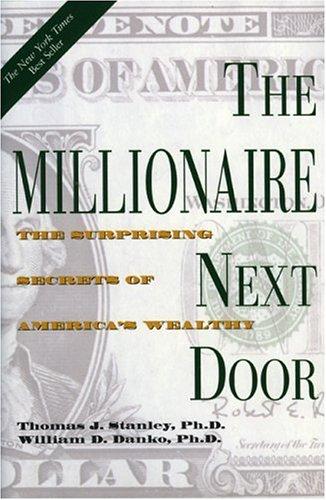
For anyone who confuses high income with wealth, or who feels behind because their lifestyle doesn't look like the we…
Buy on Amazon →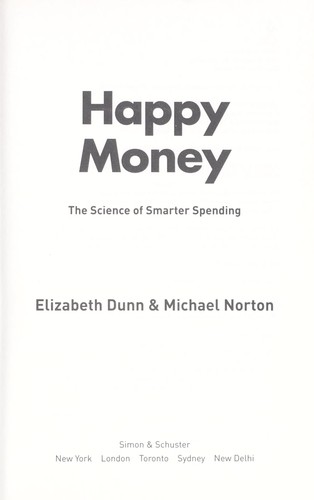
Anyone who earns enough to make discretionary spending choices but suspects their spending is not generating proporti…
Buy on Amazon →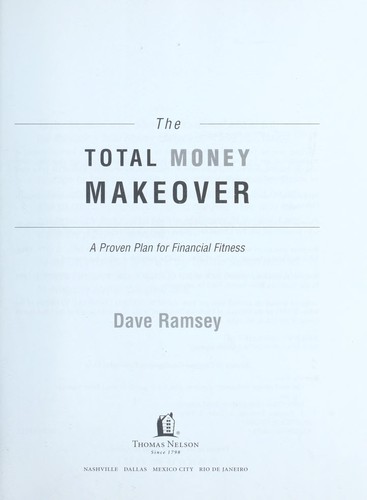
Households in active consumer-debt distress who need a non-negotiable shared script. Not for investors already past B…
Buy on Amazon →How Your Money Counts stacks up
About Howard Dayton
Read more from Howard Dayton and explore the full bibliography on ClearValue Books.
View Howard Dayton's page →Get an email if our take on Your Money Counts changes.
We re-review our picks. We'll email you if Your Money Counts's ranking or review changes — no checking back.
Across the site
Compared with

Ready to read Your Money Counts?
Buy the edition we recommend on Amazon.
Buy on Amazon →