

Your money life

Curated by Brian Kim, CPA — every pick gets a plain-English summary and the key takeaways.
Brian Kim, CPA · 2.89M YouTube Subscribers →What this book actually teaches
- 01The decade-by-decade structure is the book's primary organizational advantage — the financial priorities and decisions for a 25-year-old (building the emergency fund, avoiding lifestyle inflation) are materially different from those for a 45-year-old (closing retirement savings gaps, managing multiple competing priorities), and the structure reflects that rather than defaulting to universal advice.
- 02Dunn is categorical on the retirement-versus-college-savings trade-off: retirement savings takes priority, and this is a mathematical argument rather than a selfish one — children can borrow for college; retirees cannot borrow for retirement.
- 03The forties chapter is the most urgent in tone: Dunn argues this is the last decade in which compound math works substantially in a retirement saver's favor, and that people behind on savings face a narrowing window for closing the gap without changing their retirement timeline.
- 04Home affordability guidance is more conservative than most: Dunn argues against purchasing at the upper limit of mortgage qualification, and for clearing consumer debt and building a full emergency fund before closing — a position that runs against standard mortgage industry marketing.
- 05The 2014 publication date makes specific contribution limits, Roth IRA income thresholds, and student loan repayment program details unreliable; the decade-by-decade prioritization framework holds up better than the specific figures, which require current verification.
What's in this book
Your Money Life by Peter Dunn (Pete the Planner), published in 2014, is a personal finance guide organized around the decade of life in which the reader finds themselves — with separate chapters for your twenties, thirties, forties, fifties, and sixties that address the specific financial questions and decisions each decade typically presents. Dunn, a financial planner and personal finance commentator who writes and broadcasts under the Pete the Planner brand, argues that financial planning advice is most useful when it acknowledges where someone actually is rather than defaulting to a universal prescription that fails to account for the dramatically different financial realities of a 24-year-old versus a 54-year-old.
The twenties chapter establishes the foundational habits Dunn argues are difficult to build later: living below income from the first paycheck, building an emergency fund before investing, avoiding lifestyle inflation as income grows, and understanding how early savings decisions compound over time. Dunn is direct about the specific behaviors that derail people in their twenties — upgrading housing and vehicles whenever income rises, treating the emergency fund as discretionary savings, and carrying credit card balances from month to month — without framing these as moral failures. The chapter on student loan repayment is practical: Dunn covers the income-driven repayment options available in 2014 and the specific circumstances under which aggressive early payoff versus minimum payment plus investing makes mathematical sense.
The thirties chapter addresses the financial decisions that tend to cluster in that decade: marriage and combined finances, home purchase timing and affordability, children and the financial reality of childcare costs, and the life insurance and disability coverage gaps that tend to appear when dependents arrive. Dunn's home affordability guidance is more conservative than most: he argues against purchasing at the upper limit of mortgage qualification, and for building the full emergency fund and eliminating consumer debt before signing a mortgage. The combined finances section covers the full range of approaches (fully joint, fully separate, income-proportional hybrid) without prescribing a single right answer — though Dunn's preference for full financial transparency between partners is stated clearly.
The forties chapter is where Dunn's advice becomes most urgent in tone. He argues that the forties are the last decade in which the compound math of retirement savings works substantially in a saver's favor, and that people who are behind on retirement savings in their forties face a narrowing window for closing the gap without dramatically altering their retirement timeline or standard of living. The chapter covers catch-up contribution rules for 401(k)s and IRAs (available to people 50 and over), the sequence of retirement account funding priorities, and the college savings versus retirement savings trade-off — Dunn is categorical that retirement savings takes priority over college savings, and that this is not a selfish decision but a mathematical one.
The fifties and sixties chapters address pre-retirement planning: Social Security claiming strategy basics, Medicare enrollment timing, the specific financial preparation steps in the five years before retirement, and the income floor versus portfolio distribution approach to retirement income. Dunn's treatment of Social Security is sufficient for a general audience without going deep enough into spousal and survivor benefit optimization for readers with complex situations. The sequence-of-returns risk in early retirement gets direct treatment — Dunn explains why the first ten years of retirement portfolio performance matter disproportionately to lifetime sustainability.
This is for readers who want decade-specific financial guidance that acknowledges where they actually are rather than a universal prescription — particularly those in their thirties and forties who are managing multiple competing financial priorities simultaneously (debt, savings, housing, insurance, children's education) and need a clear prioritization framework.
The weaknesses are depth and the 2014 publication date. The decade-by-decade structure produces breadth at the cost of depth on any specific topic — readers who need detailed guidance on Social Security optimization, asset allocation mechanics, or specific tax-advantaged account strategies will need dedicated resources beyond what this book provides. The 2014 publication date means specific contribution limits, income thresholds for Roth IRA eligibility, and student loan repayment program details require current verification. The college savings section's treatment of 529 plans is adequate but predates some of the rule changes that expanded their utility.
For readers looking for a practically organized, non-jargon-heavy framework that helps them identify the right financial priorities for their life stage, Your Money Life delivers that more effectively than most personal finance books that attempt to address all ages simultaneously.
Read next

For anyone whose financial education was "get a good job and save" — the book is most valuable for first-time readers…
Buy on Amazon →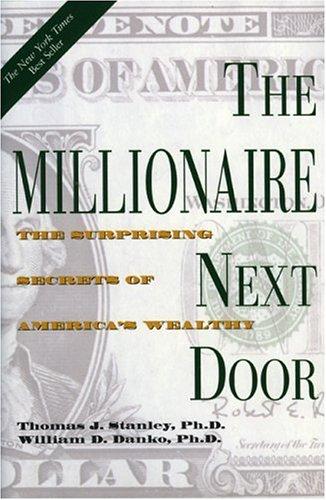
For anyone who confuses high income with wealth, or who feels behind because their lifestyle doesn't look like the we…
Buy on Amazon →
Anyone who earns enough to make discretionary spending choices but suspects their spending is not generating proporti…
Buy on Amazon →
Households in active consumer-debt distress who need a non-negotiable shared script. Not for investors already past B…
Buy on Amazon →About Dunn Peter Writer On Personal Finance
Read more from Dunn Peter Writer On Personal Finance and explore the full bibliography on ClearValue Books.
View Dunn Peter Writer On Personal Finance's page →Get an email if our take on Your money life changes.
We re-review our picks. We'll email you if Your money life's ranking or review changes — no checking back.
