
Building a Financial Library on a Budget.
The 10 books worth owning, and how to build the rest of the shelf for free
Books in this guide.




A well-built financial library is one of the highest-return investments available — but the finance section of a bookstore can easily produce $500 in impulse purchases that duplicate each other and leave the buyer no better educated than when they started.
The goal is not to own every finance book. The goal is to own the right books and access the rest.
The 10 books worth owning (and why ownership matters)
Some books benefit from ownership in a way that library borrowing doesn't provide: they're worth annotating, returning to, and keeping as reference documents. The following list is designed for durability and re-readability rather than novelty.
The Psychology of Money — annotate it heavily. The 20 essays are worth returning to in different life stages when different behavioral patterns become relevant.
The Intelligent Investor — the annotated Jason Zweig edition is the right version. Graham's commentary becomes more legible after annotation, and the book is dense enough that re-reading produces new understanding.
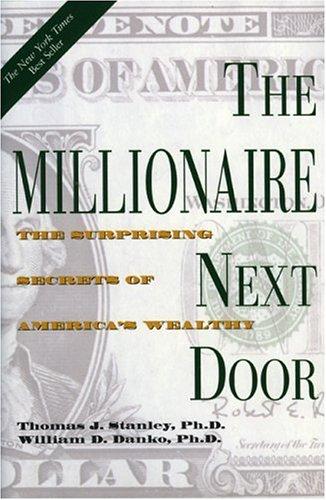
The Millionaire Next Door — the data tables and charts are worth returning to. Owning the book makes it easier to flip to specific chapters when calibrating lifestyle decisions.
The Simple Path to Wealth — the most useful investment reference in the personal finance canon for someone who has decided on an index-fund approach. Worth keeping near the desk during annual portfolio reviews.
One Up on Wall Street — if active stock analysis is part of the plan, Lynch's practical checklist approach is worth keeping annotated. It's also an entertaining re-read.
The Total Money Makeover — for readers working through a debt elimination plan, physical ownership means the book can be referenced during the multi-year execution without renewing it from the library repeatedly.
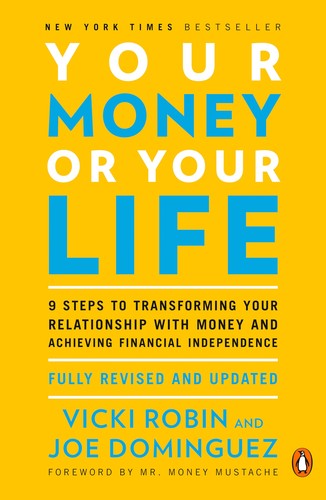
Your Money or Your Life — the most philosophically durable book in personal finance. Worth re-reading every five years as circumstances change.
Think and Grow Rich — the original Napoleon Hill text is worth owning for its historical context and its chapters on decision-making and organized planning, which are underappreciated compared to the book's reputation for motivational content.
Unshakeable — Tony Robbins's distillation of index-fund investing and fee awareness. Thinner than most books on this list, but worth having as a quick-reference.
Common Stocks and Uncommon Profits — Philip Fisher's framework for qualitative stock analysis. A different analytical tradition from Graham, and worth owning as a permanent reference for those who engage in individual stock selection.
How to access everything else for free
The library system is underutilized for financial books. Most public library systems carry the major personal finance titles, and many now provide digital access through apps like Libby and Hoopla, which means same-day access to most titles without a waitlist.
For the Berkshire Hathaway letters to shareholders — arguably the best body of financial writing available — they're free to download from berkshirehathaway.com. Warren Buffett has made the full archive public.
SEC EDGAR (sec.gov) provides free access to every 10-K, annual report, and prospectus filed by U.S. public companies. This is more raw material than any finance book covers.
Google Scholar and many public university libraries provide free access to academic finance papers. The research behind the 4% safe withdrawal rate, efficient market hypothesis, factor investing, and most other foundational finance concepts is available without a subscription.
Used books and book sales
Financial books that are even five years old are usually available for $1-5 in used condition. The core frameworks in The Intelligent Investor (updated edition 2003), The Millionaire Next Door (1996), One Up on Wall Street (1989), and Common Stocks and Uncommon Profits (1958) haven't changed. Buying used finance books is one of the highest-return financial decisions available.
Library book sales, thrift stores, and estate sales reliably carry financial titles in good condition. The most dedicated readers often build 50-book libraries from these sources for under $50.
The books not worth buying
The finance section contains many books that are recycled content in new packaging: the same cash flow advice with a different metaphor, the same behavioral economics with new case studies. These books are fine to borrow but rarely worth owning. The distinguishing characteristic of a book worth owning is whether it contains original research, original frameworks, or original data — not whether it's well-written or highly reviewed.
Common questions.
Is it worth buying the Kindle version to save money?
For most finance books, yes — especially for lighter reading. For annotation-heavy books like The Intelligent Investor, physical is preferable because annotating and flagging specific sections is easier. Many readers buy both formats for their highest-use books.
How do I decide if a book is worth buying vs. borrowing?
A simple test: will you want to return to specific sections of this book in five years? If yes, buy it. If the book is primarily a one-time read with a clear main thesis you can internalize, borrow it.
What about audiobooks for finance titles?
Audiobooks work well for narrative-heavy finance books. They're less effective for books with charts, tables, or dense analytical frameworks where visual reference matters. Most public libraries provide free audiobook access through Libby.