
Building a Financial Library: What to Own vs Borrow.
Which finance books earn a permanent shelf spot and which belong at the library
Books in this guide.




A serious personal finance library is roughly 15-25 books. Not 150. The instinct to buy every well-reviewed book leads to a shelf of dust and a credit card statement that proves you read about money instead of managing it.
The real question with any finance book is: will I come back to this? If yes, own it. If no, borrow it once, take notes, return it.
Own the reference books
Reference books are the ones you re-open. You don't read them cover-to-cover every year. You pull them off the shelf when a specific question hits.
The Intelligent Investor is a reference book. You'll re-read Chapter 8 (Mr. Market) and Chapter 20 (Margin of Safety) every few years when the market does something stupid and you want Graham's voice in your head. Own it.
The Psychology of Money is a reference book. The essays are short enough to re-read in 10 minutes, and the lessons hit differently in different life stages. Own it.
The Elements of Investing is a reference book. It's a 200-page argument for index funds you'll want to hand to a younger sibling or a new spouse. Own it, and own a second copy to give away.
The Simple Path to Wealth fits the same pattern — own one, gift the second copy. JL Collins wrote it as a series of letters to his daughter; it functions best when you can physically pass it to someone.
Own the books you'll mark up
If a book demands annotation, you have to own it. The Intelligent Investor is unreadable in a library copy because half the value is in YOUR margin notes. Same with Margin of Safety (which is also out of print and harder to borrow anyway — used copies sell for hundreds).
Books that are essentially essay collections — The Psychology of Money is the cleanest example — also reward owning because you'll re-mark different passages on different reads.
Borrow the one-pass books
Most "story" finance books are one-pass. Rich Dad Poor Dad has one core insight (assets vs liabilities reframed). Read it once, get the insight, return it. You will not re-read it.
One Up on Wall Street is borderline. Peter Lynch's framework for finding stocks by paying attention to what you actually use is valuable, but the book is anecdote-heavy and a single careful read is usually enough. Borrow first, buy only if you find yourself wanting to underline it.
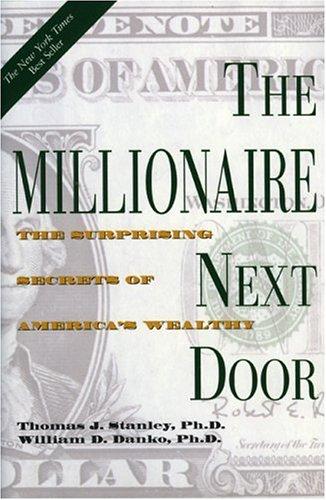
The Millionaire Next Door and The Next Millionaire Next Door are great one-pass reads. The data is the value, and the takeaway compresses to "high earners often don't accumulate wealth; quiet savers do." Borrow, take notes, return.
Digital Gold (the Bitcoin origin story) is journalism, not reference. Read once for the history, return.
Borrow the books you're not sure about
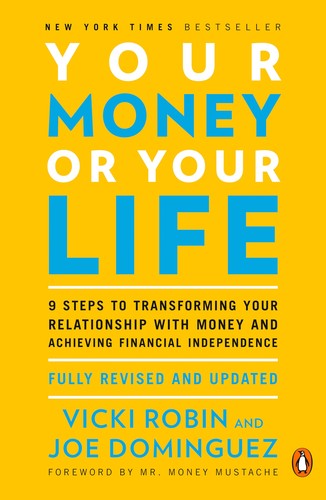
If a book is well-reviewed but you can't tell if it'll matter to you, borrow it. The Total Money Makeover and Your Money or Your Life are both in this category for many readers — life-stage-dependent, and you'll know in the first 50 pages whether the message lands for where you are right now.
Why Smart People Make Big Money Mistakes is another borrow-first: a single read gives you the behavioral-finance vocabulary, and most readers don't return to it after.
A practical shelf
A working personal-finance shelf for a normal person might look like:
- The Psychology of Money (own, gift copies) - The Intelligent Investor (own, annotated edition) - The Simple Path to Wealth (own, gift copies) - The Elements of Investing (own) - One title on real estate or retirement specific to your situation (own)
That's it. Five books on the shelf. Twenty more passing through from the library each year. The shelf isn't a museum of your good intentions — it's the books you actually return to.
The honest test
Before you buy a finance book, ask: in three years, will I take this off the shelf? If you can't picture the moment you'd reach for it, borrow it. If you can — if you can imagine the exact market moment or life moment when you'd want this voice in your head — own it.
A 20-book library you actually use is worth more than a 200-book library you don't.
Common questions.
Hardcover, paperback, or ebook?
Hardcover for reference books you'll annotate over decades (Intelligent Investor, Psychology of Money). Paperback for one-pass reads. Ebook for travel and for books you're trying before buying — but if you find yourself highlighting heavily, buy the physical copy.
What about audiobooks?
Audiobooks work for narrative books (Digital Gold, Millionaire Next Door) where the goal is absorbing a story or argument. They work poorly for reference books with tables, formulas, or detailed examples (Intelligent Investor). Match format to content.