
Building a Retirement Planning Bookshelf.
The books that cover accumulation, withdrawal, Social Security, and the non-financial dimensions of retirement
Books in this guide.




Retirement planning is one of the most researched topics in personal finance and also one of the most misunderstood. The popular conversation focuses almost entirely on accumulation — how much to save, what to invest in, what rate of return to assume. The withdrawal phase — how to actually spend the portfolio without running out of money — receives far less attention, and most available books either oversimplify it or address only narrow aspects of a genuinely complex problem.
The shelf below covers both phases, with attention to the non-financial dimensions of retirement that purely analytical books ignore.
Foundation: the accumulation framework
The Simple Path to Wealth by JL Collins is the most concise and readable accumulation guide available. Its central argument — accumulate index funds, minimize fees, let time and compounding do the work — is supported by decades of academic research and doesn't require active investment decisions. For readers who haven't already built an accumulation framework, this is the right first book.
The behavioral foundation
The Psychology of Money by Morgan Housel addresses the behavioral patterns that undermine retirement savings: recency bias (abandoning the market during downturns), status spending (lifestyle inflation that absorbs savings capacity), and the failure to distinguish between wanting things and wanting money. These behavioral patterns affect accumulation and withdrawal equally, and understanding them before either phase begins is worth more than any specific investment strategy.
The FIRE variant
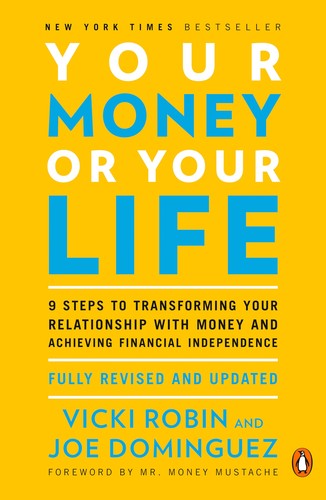
Your Money or Your Life by Vicki Robin is the foundational text for early retirement planning. Its concept of the "crossover point" — when passive income from invested assets exceeds expenses — is the central mathematical objective of FIRE planning. Even for readers who don't plan to retire early, the book's framework for thinking about the relationship between time, money, and life energy is the most useful conceptual tool available for retirement planning.
The wealth as enough question
How Much Is Enough? by Robert and Edward Skidelsky is the most philosophically serious book on retirement planning. It asks what kind of life is actually worth living and what role material wealth plays in it. The retirement planning conversation almost never engages with this question directly — it focuses on target numbers and withdrawal rates without asking what the money is for. Reading this book before finalizing a retirement plan is the most underrated preparation available.
Understanding wealth accumulation patterns
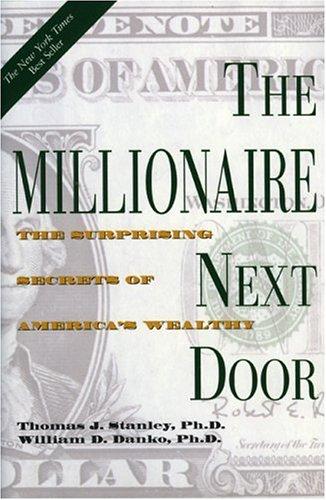
The Millionaire Next Door provides empirical grounding for the accumulation phase: how the genuinely wealthy actually built and preserved their assets, what their spending patterns look like, and the common characteristics of Americans who reached financial independence on ordinary incomes. The Next Millionaire Next Door (the 2018 follow-up by Thomas Stanley's daughter Sarah Stanley Fallaw) updates the research for the social media age and adds analysis of how wealth building patterns have shifted across generations.
A note on withdrawal
Retirement withdrawal strategy — safe withdrawal rates, Social Security optimization, Medicare sequencing, Required Minimum Distributions — is an area where popular books are weaker than fee-only financial planning resources. The academic research on safe withdrawal rates (the Bengen and Trinity studies) is freely available online and is the source material for most book-level treatment of the topic. Readers who want depth on the withdrawal phase are better served by the research directly plus a fee-only financial planner than by most books on the market.
Common questions.
What's the most important retirement planning book for someone starting at 50?
Your Money or Your Life addresses the crossover-point math in a way that is useful at any age. For someone starting at 50, the math of the crossover point and the behavioral changes required to reach it are more urgent — this book addresses both.
Is there a good book specifically on Social Security optimization?
Social Security optimization is primarily a technical calculation problem that changes as the law changes. Books on this topic age quickly. The Social Security Administration's website (ssa.gov) and fee-only financial planners are more reliable sources than books for current-year optimization.
How do I think about the non-financial aspects of retirement — purpose, structure, social connection?
How Much Is Enough? engages with this most directly. The FIRE community's forums and communities also address it extensively — the experience of early retirees who found the financial preparation sufficient but the identity and purpose transition difficult is well-documented in community writing, if not yet in durable books.