
Building a Real Estate Investing Bookshelf.
The books that cover acquisition, financing, management, and exit — across property types
Books in this guide.



Real estate is one of the most written-about topics in personal finance, and one of the most redundant. A search for "real estate investing books" produces hundreds of titles that largely repeat the same advice about location, leverage, cash flow analysis, and the benefits of depreciation.
The shelf below is designed differently: each book covers ground the others don't. Together they address the full spectrum from philosophy to mechanics to advanced strategy, without repetition.
Start with the financial foundation
Before acquiring a property, an investor needs a clear framework for thinking about assets, income, and cash flow. Rich Dad Poor Dad by Robert Kiyosaki is the most widely read introduction to this framework — its asset/liability distinction is imprecise by accounting standards but useful as a first mental model. Read it as an orientation, not a how-to guide.
The Business Owner's Guide to Financial Freedom by Mark Kohler and Mat Sorensen covers the tax treatment of real estate investment specifically — depreciation, cost segregation, 1031 exchanges, and the real estate professional designation. Understanding these mechanics before acquiring a first property is worth considerably more than understanding them after.
Add the analytical framework
Value Investing Made Easy by Janet Lowe applies Graham's security analysis framework to the concept of buying assets at a discount to intrinsic value. While Graham focused on stocks, the underlying concept — buying cash-flow-producing assets at prices below their economic value — transfers directly to real estate analysis.
The analytical skills that distinguish successful real estate investors from unsuccessful ones are the same skills that distinguish successful stock investors: the ability to calculate what an asset is actually worth and to buy it at a price below that calculation.
Understand the market and cycle dynamics
A History of the United States in Five Crashes by Scott Nations covers the history of financial crises in the U.S., including the 2008 housing crash. Understanding what happened in 2008 — the mechanics of how leveraged real estate prices can decline catastrophically — is essential context for any investor who plans to use debt to acquire property.
The Automatic Millionaire Homeowner by David Bach covers the basic mechanics of homeownership as a wealth-building strategy, with attention to the psychology of building equity over time. It's a starting point for first-time investors rather than an advanced guide.
Add the Millionaire Next Door perspective
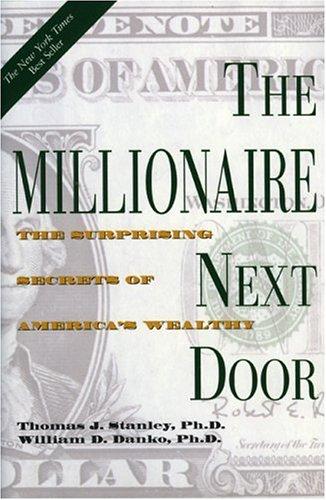
The Millionaire Next Door's data on how wealth is built in the United States includes significant analysis of business owners and self-employed individuals, many of whom hold real estate as part of their portfolios. The book's findings on how the genuinely wealthy allocate assets are more useful as calibration than as specific instruction.
The shelf in sequence
A real estate investor who has worked through this shelf will have:
- A conceptual framework for thinking about assets and income (Rich Dad Poor Dad, Millionaire Next Door) - A tax and legal framework for investment property (Business Owner's Guide) - An analytical framework for valuing property (Value Investing Made Easy applied to real estate) - Historical context for market cycles and risk (Five Crashes) - Practical mechanics for first-time investors (Automatic Millionaire Homeowner)
That's a complete education for the first property. Advanced topics — commercial real estate, syndication, REITs, development — require specialized books beyond this shelf, but those books make more sense after this foundation is in place.
Common questions.
Are there any books specifically on rental property analysis?
The books above cover the principles. For detailed rental property analysis mechanics — cap rates, NOI, cash-on-cash return — real estate-specific titles from practitioners fill that gap. The analytical framework from Value Investing Made Easy applies to rental property cash flow analysis with straightforward adaptation.
Is real estate investing appropriate for someone still paying off debt?
The conventional personal finance sequence (Ramsey's Baby Steps, for example) places debt elimination before investment. Real estate adds leverage on top of existing leverage in a consumer's balance sheet. The Business Owner's Guide covers how to think about this sequencing for real estate specifically.
What about house hacking, short-term rentals, or REITs?
These sub-categories require specialized reading that goes beyond this shelf. REITs are covered in index fund investing books as an asset class. House hacking and short-term rental strategy are better addressed by practitioner-written books and communities specific to those strategies.