
Building a Tax Strategy Bookshelf.
The books that build a working framework for personal and business tax strategy
Books in this guide.



Tax planning is one of the highest-return activities available to anyone with meaningful income, and one of the most neglected. Most people interact with taxes once a year, reactively, filling out forms to report what already happened rather than planning in advance to change what will happen.
Books on tax strategy fall into two categories: the annually updated guides that document current-year rules (useful but perishable), and the durable frameworks that explain how the tax system works and how to position income, deductions, and entity structure advantageously regardless of the specific rules in effect. The shelf below focuses on the second category.
The foundational framework
Understanding how the tax code works — not just the current rates, but the underlying structure of income types, deduction categories, and entity taxation — is the prerequisite for any tax strategy. The Business Owner's Guide to Financial Freedom by Mark Kohler and Mat Sorensen covers this framework better than any other single book, with particular focus on the tax situation of self-employed individuals and small business owners.
Kohler and Sorensen address entity structure (sole proprietorship vs. S-corp vs. LLC vs. C-corp), retirement accounts available to business owners (Solo 401(k), SEP-IRA, defined benefit plans), real estate tax treatment (depreciation, cost segregation, 1031 exchanges), and the real estate professional designation. This is the most practically useful tax book for anyone with non-W2 income.
The historical and structural context
Taxation, Wealth and Saving provides the macro framework for understanding how tax policy shapes wealth accumulation at the individual and societal level. It's not a how-to book but a conceptual framework — understanding the structure of capital gains treatment, the difference between ordinary income and long-term gains, and the tax treatment of different asset classes makes specific strategies more legible.
US Taxation of Foreign Income is a reference text rather than a reading book, but it's worth knowing exists for anyone with international income sources, foreign investments, or expatriate situations.
The personal finance integration
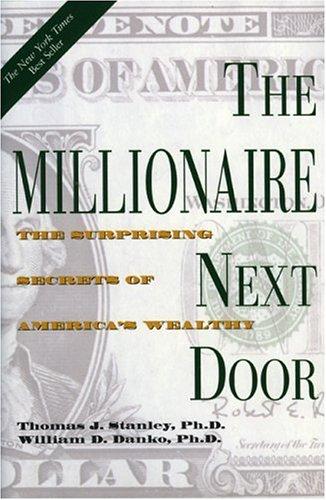
Tax strategy doesn't exist in isolation — it's one component of a complete financial picture. The Millionaire Next Door's research on how wealthy Americans manage their taxes (modestly, through asset selection and income timing rather than aggressive sheltering) provides useful calibration.
The Simple Path to Wealth by JL Collins covers the tax treatment of index fund investing — the role of tax-advantaged accounts (401k, IRA, Roth), the mechanics of tax-loss harvesting, and the advantage of low-turnover investing from a capital gains perspective. For the majority of investors whose primary investment vehicle is index funds, this is the most relevant tax guidance available.
What's missing from this shelf
The books above don't cover year-specific rules, state-specific tax treatment, or highly specialized situations (carried interest, stock options, international trust structures). For those topics, the combination of a CPA and the current-year IRS publications is more reliable than any book.
The shelf also doesn't replace professional advice. The value of these books is building enough understanding to ask better questions of a tax professional, not to replace one.
A note on the annual-update trap
Many readers gravitate toward annually updated tax guides. These are useful for looking up specific rules but poor for building strategic frameworks, because they document rules without explaining the structure underneath. A reader who understands why the tax code treats long-term capital gains at lower rates than ordinary income will make better decisions than one who has memorized the current-year rate table.
The books above are designed to build that structural understanding. The rate tables are a Google search away.
Common questions.
Is there a good tax book for someone with only W2 income?
The most impactful tax decisions for W2 employees are 401(k) contribution levels, HSA usage, and Roth vs. traditional allocation — decisions The Simple Path to Wealth addresses clearly. Beyond those, the tax strategy options for pure W2 employees are limited enough that the ROI on detailed tax reading is lower than for business owners.
Should a small business owner read these books or just hire a CPA?
Both. A CPA implements strategies; a business owner who understands the framework will be better positioned to identify opportunities and ask the right questions. The Business Owner's Guide to Financial Freedom is specifically designed to make business owners better clients of their tax professionals.
How often do I need to re-read tax books as laws change?
The structural frameworks in these books — entity type selection, account type selection, income timing — change slowly. Specific rates and limits change annually. Use these books for the frameworks; use irs.gov and a CPA for current-year specifics.