
How to Take Notes on Finance Books So You Actually Remember the Lessons.
A simple system that beats highlighting and outlasts the dopamine of finishing
Books in this guide.


Six months after finishing The Psychology of Money, most readers can tell you they liked it. Some can name one or two essays. Almost none can articulate the actual framework. The book did not stick.
The problem isn't the book or the reader. The problem is the input method. Highlighting feels productive but doesn't survive contact with time. Here's a note system that does.
The three-layer system
Every book gets three layers of notes: highlights (in the book), a one-page summary (written within a week of finishing), and a "use list" (3-5 specific situations where you'd apply this).
The first layer is passive. The second turns reading into thinking. The third turns thinking into action. Skip either of the last two and you'll forget the book.
Layer 1: highlights, but with a constraint
The mistake most readers make is highlighting too much. A book with 200 highlights is a book with no highlights — you can't re-read 200 passages, so you re-read none.
The rule: three highlights per reading session. If something is your fourth-most-important passage of the session, it's not worth marking. The constraint forces you to actually decide.
For The Intelligent Investor, this might leave you with ~120 highlights across 8 weeks of reading. For The Psychology of Money, maybe 40 across two weeks. That's a re-readable amount.
Layer 2: the one-page summary
Within a week of finishing, write a one-page summary. Not a chapter-by-chapter outline. A one-page argument for what the book is actually trying to say.
For The Psychology of Money, the one-page summary might be: "Doing well with money has little to do with intelligence and a lot to do with behavior. Reasonable beats rational. Tail events drive most outcomes. Room for error is the most underrated financial skill. Avoiding catastrophe matters more than maximizing returns."
That's most of the book in 50 words. If you can't compress the book into a page, you didn't understand the book — and writing the page is how you finish understanding it.
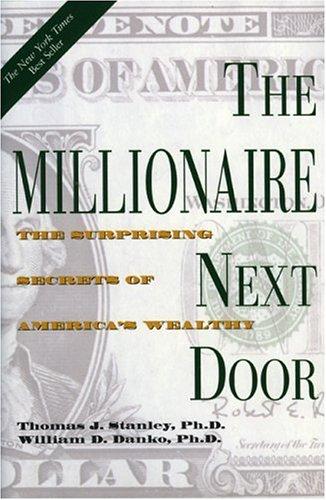
For The Millionaire Next Door, a one-page summary might lead with the prodigious-accumulator-of-wealth formula and the finding that most millionaires are quiet, frugal, and self-employed in unsexy businesses. Three sentences, and you've captured most of what a careful reader walks away with.
Layer 3: the use list
This is the layer almost no one does, and it's the one that matters. After the summary, write 3-5 specific situations where you'd apply this book's lesson.
For The Intelligent Investor: "When the market drops 30%, re-read Chapter 8 and remember Mr. Market is offering, not telling. When evaluating a stock, calculate the margin of safety before the upside case."
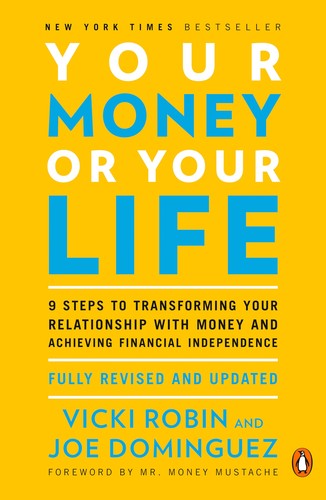
For Your Money or Your Life: "When considering a job offer, calculate the real hourly wage after commute, taxes, work-only expenses. When considering a purchase, convert price to hours of life energy."
For The Total Money Makeover: "When tempted to invest before paying off the credit card, re-read the debt snowball chapter."
The use list is what you re-read. Not the book. Not the summary. The list.
Where to keep the notes
One notebook or one digital doc per book is fine. What matters more is one master index — a single document listing every finance book you've finished with a link to its notes. You'll forget which book a specific framework came from; the index is how you find it.
Tools like Notion, Obsidian, or even a Google Doc work equally well. The specific tool is a much smaller decision than people make it.
The annual re-read
Once a year, re-read your one-page summaries and use lists. Not the books. The notes. This takes maybe two hours for a 20-book library and is the single highest-leverage reading activity most people never do.
This is also when you'll discover that some "five star" books didn't survive the year — the summary doesn't move you, the use list never got used. That's useful data. Some books are great once. Some books are great every year. Your notes tell you which is which.
Why this works
The system mirrors how working professionals actually use knowledge: a small amount of high-signal output that gets re-read, not a large amount of raw input that gets forgotten. CPAs don't re-read the entire tax code; they re-read their own working notes. Doctors don't re-read every journal article; they re-read their own summaries.
Treat finance books the same way. The book is the input. The notes are the asset.
Common questions.
Paper notes or digital?
Either works. Paper has better retention for the writing-it-down step; digital has better retrieval for the annual re-read. A common pattern: write the one-page summary by hand, then transcribe it digitally for the index.
How long should the one-page summary actually take?
30-60 minutes. Less and you're skimming highlights; more and you're rewriting the book. The compression is the point — if it's easy, you didn't compress hard enough.
What if I'm reading several books and falling behind on notes?
Stop reading the next book until the previous book has its summary. Reading without notes is entertainment. Reading with notes is education. Pick which you're doing.