
Reading Financial Books With a Partner: How to Stay Aligned.
Using shared reading to surface the money conversations you'd otherwise avoid
Books in this guide.

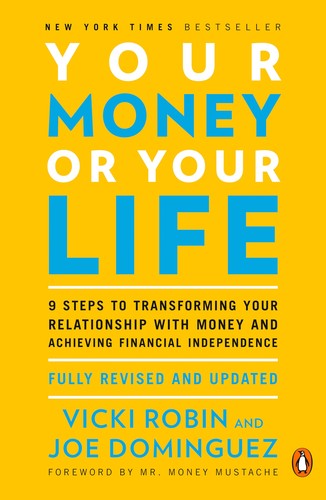
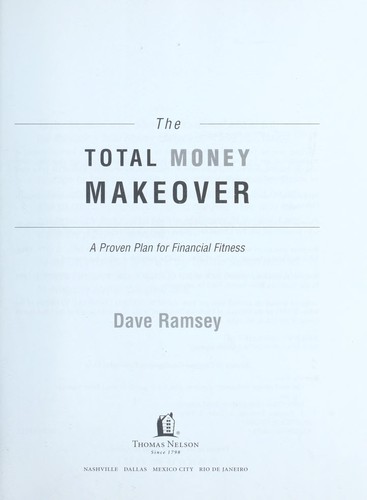

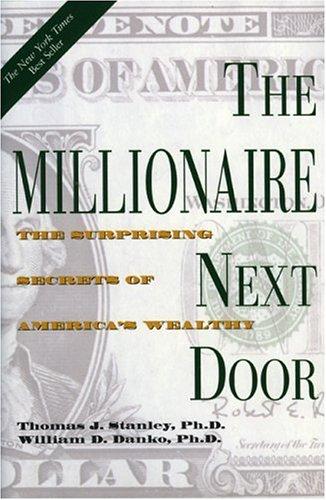


Most couples talk about money the same way: in reaction to a bill, a purchase, or a tax bracket they just landed in. The framework conversation — what do we actually believe about debt, risk, retirement, lifestyle — almost never happens proactively.
Reading the same finance book together is the lowest-friction way to fix that. The book carries the awkwardness. You and your partner just react to it. Done well, it surfaces years of unspoken assumptions in 20 minutes a night.
Why this works better than "let's talk about money"
A blank-slate "let's talk about our finances" conversation has no agenda and infinite scope. It tends to devolve into the topic with the most emotional charge — usually the last argument or the next big purchase. Productive conversations come from constrained ones.
A shared book is the constraint. You're not reacting to your partner. You're both reacting to Morgan Housel or Vicki Robin. The disagreement, when it surfaces, is about an idea, not about each other.
Pick the right first book
The Psychology of Money is the cleanest first book for couples. Short essays, no prerequisites, no tactical "you should do X" pressure. Each essay is a 10-minute read and a 20-minute conversation. The book is structured for stop-and-start, which matches how couples actually read together.
Your Money or Your Life is the right first book for couples who suspect they're misaligned on what work and money are FOR. The book's central reframe — that money is life energy — is one of the few finance frameworks that genuinely lands differently when two people install it together.
The Total Money Makeover is the right first book for couples in active debt-elimination mode. The book is opinionated and tactical, which is what you need when you're trying to align on a 24-month plan, not a philosophy.
The Simple Path to Wealth is right for couples who broadly agree on values but disagree on tactics. JL Collins is unusually clear about what to do, which short-circuits a lot of "we should probably look into investing" inertia.
The wrong first books are the dense classics. The Intelligent Investor will defeat one partner and frustrate the other. Save Graham for when you both already have a reading habit.
The actual routine
20 minutes a night, three nights a week. Same chapter. Read separately or together, your call. Then talk for 10 minutes. That's it.
The talk is not a debate. The talk has one question: what did this chapter make you think about in OUR finances? Not in finance generally. In yours.
For The Psychology of Money's chapter on "Reasonable Beats Rational," the conversation might be: are we being rational about saving 25% and missing out on lived years, or are we being reasonable? For Your Money or Your Life's chapter on real hourly wage, the conversation might be: what's the actual hourly wage on your job after commute and taxes — and is the answer informing what we plan for next?
The book asks the questions. You just answer them, out loud, to each other.
Handle disagreement on purpose
You will hit chapters where you disagree. That is the value, not the problem. The Total Money Makeover argues against using credit cards at all. One partner may agree, the other may not. The disagreement was always there. The book just gave you a structured place to find it.
Two rules: name the framework, not the partner. "I disagree with Dave Ramsey here because…" not "you're being unrealistic." And: write down the disagreement. A shared note (paper or digital) of "frameworks we agree on" and "frameworks we don't yet agree on" is the single most useful artifact this routine produces.
What done looks like after a year
Four to six books in a year is plenty for a couple. That's roughly one book every two months. A reasonable progression:
- Months 1-2: The Psychology of Money (frame) - Months 3-4: Your Money or Your Life (philosophy) - Months 5-6: The Simple Path to Wealth (tactics) - Months 7-8: The Millionaire Next Door (data on behavior) - Months 9-10: The Total Money Makeover OR The Automatic Millionaire Homeowner (specific situation) - Months 11-12: revisit and re-discuss the first book
End of year, you have a shared vocabulary, a documented set of frameworks you both agree on, and a list of the ones you're still working through. That's a 10x better starting point than most couples reach in a decade of unstructured money talk.
When one partner doesn't want to read
Some partners aren't readers, and that's fine. Audiobooks work — listen on a drive, talk afterward. One partner reads, then shares the one-page summary, and the conversation happens off the summary. The output is the same: a shared vocabulary, surfaced disagreements, a list of frameworks you've agreed to operate on.
The reading is the input. The aligned conversation is the goal. If the input has to be modified to suit one partner's medium preference, that's not a compromise — it's a working system.
Common questions.
What if we read at very different speeds?
The slower reader sets the pace. The faster reader can read other books on the side. The shared book is the meeting, not the race.
Should we set financial goals during this routine?
Not in the first month. The first month is for vocabulary and surfacing frameworks. Goals tend to land better around month three, once the underlying values are explicit. Set goals once you know what you actually agree on.
What if we hit a chapter that triggers a real fight?
Stop reading for a day or two, deal with the actual issue, then come back. The book is a tool, not an obligation. If a chapter on debt surfaces an unresolved money story, that's the thing to work on, not the next chapter.