
Why Most Personal Finance Books Give the Same Advice.
The reason the core message hasn't changed in 70 years — and why that's actually the point
Books in this guide.



A reader who works through a shelf of personal finance books eventually notices something: they're all saying the same thing. Spend less than you earn. Save a percentage of every paycheck. Invest in diversified, low-cost assets. Avoid consumer debt. Be patient.
This observation is usually made as a criticism. Why are there thousands of personal finance books if they all give the same advice? The answer is more interesting than the critique suggests.
The advice is the same because it's correct
The core of personal finance advice has remained stable for decades because the mathematical and behavioral underpinnings don't change. Compound interest works the same way it did in 1950. The correlation between savings rate and financial independence is structural, not fashionable. The behavioral patterns that undermine financial success — loss aversion, status spending, present bias — are features of human psychology, not of any particular economic era.
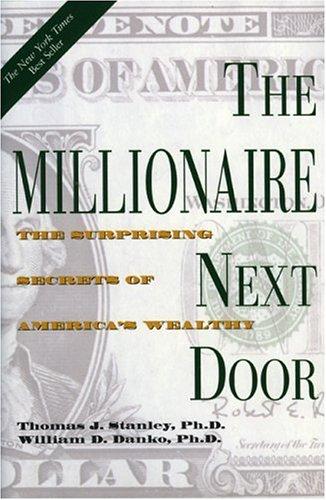
The Millionaire Next Door documented how wealthy Americans actually built their wealth in 1996. Its core finding — that most millionaires accumulated wealth through consistent saving and avoidance of lifestyle inflation, not through exceptional income or investment sophistication — has been replicated in subsequent research. The message hasn't changed because the mechanism hasn't changed.
The packaging changes because audiences change
If the core advice is identical, why do new personal finance books get written? Because the audience keeps changing, and different audiences need different packaging for the same information to land.
The Psychology of Money by Morgan Housel covers concepts that Benjamin Graham addressed in the 1940s. What Graham called investor behavior, Housel calls behavioral economics. The mechanism is the same; the language and case studies are updated for readers who grew up with index funds and the 2008 financial crisis rather than the Great Depression.
Clever Girl Finance packages the same core advice — earn more than you spend, invest the difference — for an audience that wasn't well-served by the mid-century finance books, which assumed a male primary earner and a different financial infrastructure.
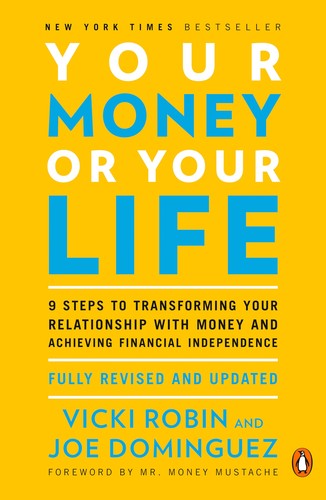
Your Money or Your Life makes the same argument for frugality and financial independence that most earlier personal finance books make, but grounds it in a philosophical framework about the relationship between time and money that differs from the purely accumulation-focused framing of most of its peers.
The disagreements are at the margins, not the core
Where personal finance books actually disagree is not on the core principles but on tactical choices: should the emergency fund come before debt payoff or simultaneously? Should a mortgage be paid off aggressively or invested at the spread? Should tax-advantaged retirement accounts be filled before taxable investing, and if so in what order?
These tactical disagreements are real and meaningful — they can affect outcomes. But they all assume the core principles already in place: positive cash flow, systematic saving, long time horizon.
Why this matters for reading
Understanding that most personal finance books share a core doesn't mean reading only one. Different books articulate the same principles in ways that land differently for different readers. Some people internalize compound interest mathematically. Others need a story. Others need data. The books exist to find the version that connects.
What it does mean is that a reader who has fully internalized two or three well-chosen books has effectively learned what hundreds of books teach. The next books to read should be ones that genuinely extend the knowledge rather than repackage it. That's a different kind of shelf-building than reading for completeness.
The books that extend beyond the core
The books that add something genuinely distinct to the core message are valuable in a different way. The Intelligent Investor's margin of safety concept is a specific analytical tool that doesn't appear in most personal finance books. How Much Is Enough? engages with a philosophical question that most finance books avoid. One Up on Wall Street's practical stock analysis methodology is distinct from the index fund consensus.
These books are worth reading after the core has been internalized — not instead of it.
Common questions.
If the advice is the same, which personal finance book should someone read first?
The Psychology of Money is the most universally recommended starting point because it addresses the behavioral layer before the tactical one. After that, the right next book depends on the reader's most pressing financial question.
Are there personal finance books that genuinely offer new advice?
Yes, at the margins. Books that address specific life circumstances (disability, divorce, immigration, early retirement) often offer advice not available in general personal finance books. Books grounded in new empirical research (The Next Millionaire Next Door updates the 1996 original) offer new data on established questions.
Why do so many people read multiple personal finance books if they all say the same thing?
Because knowing what to do and actually doing it are different problems. Some readers return to personal finance books as a form of behavioral reinforcement — not to learn new tactics, but to recommit to the tactics they already know. That's a legitimate use of the genre.