

How to pay for your children's college education

Curated by Brian Kim, CPA — every pick gets a plain-English summary and the key takeaways.
Brian Kim, CPA · 2.89M YouTube Subscribers →What this book actually teaches
- 01Most families approach college funding too late and without understanding how asset placement affects Expected Family Contribution calculations.
- 02Assets in a student's name are weighted more heavily against financial aid eligibility than equivalent assets in a parent's name.
- 03Each funding vehicle should be evaluated against four criteria: expected return, tax treatment, financial aid impact, and flexibility.
- 04Income timing relative to the base year of the financial aid application matters — it is not just asset levels that affect aid.
- 05The 529 plan (introduced 1996) is absent; treat the vehicle-specific guidance as historical context and apply the conceptual framework to current instruments.
What's in this book
Gerald Krefetz's 1988 guide addresses the college funding problem as a financial planning exercise: given a target cost, a time horizon, and a set of available vehicles, what is the most efficient path to accumulating enough money while minimizing the impact on financial aid eligibility? The book argues that most families approach college funding too late, too emotionally, and without enough awareness of how asset placement affects the Expected Family Contribution calculation.
Krefetz covers the major funding vehicles available at the time: custodial accounts (then governed by the Uniform Gifts to Minors Act), U.S. savings bonds, certificates of deposit, zero-coupon bonds, and mutual funds. Each chapter evaluates the vehicle against four criteria: expected return, tax treatment, financial aid impact, and flexibility if plans change. The financial aid impact dimension was underdeveloped in popular financial literature at the time, and Krefetz deserves credit for centering it early.
The financial aid section explains the Expected Family Contribution formula in detail — how parental assets and student assets are weighted differently, why assets in a student's name can reduce aid eligibility more than equivalent assets in a parent's name, and how income timing affects the base year calculation. This analysis remains conceptually useful even though the specific rules have changed significantly.
Where it falls short
the 1988 date is a significant limitation. The 529 college savings plan, which did not exist until 1996 and became the dominant college savings vehicle, is entirely absent. Tax law changes, financial aid formula revisions, and the Coverdell Education Savings Account are not covered. The specific interest rate environment Krefetz assumes for his projections reflects the late-1980s rate landscape, not current conditions. The vehicle-specific guidance has dated substantially, making the book more useful as a conceptual framework than a current action plan.
The verdict
historically interesting as one of the earlier serious treatments of college funding as a financial planning discipline. The conceptual framework — funding vehicles evaluated against return, tax treatment, aid impact, and flexibility — remains useful; the specific vehicles and numbers do not.
Read next

For anyone whose financial education was "get a good job and save" — the book is most valuable for first-time readers…
Buy on Amazon →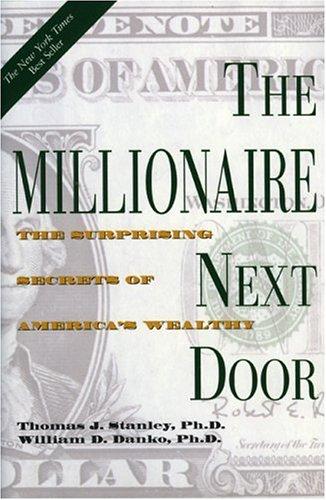
For anyone who confuses high income with wealth, or who feels behind because their lifestyle doesn't look like the we…
Buy on Amazon →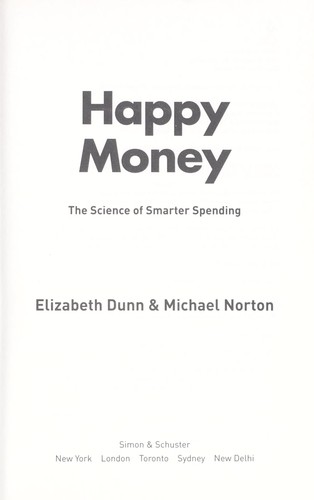
Anyone who earns enough to make discretionary spending choices but suspects their spending is not generating proporti…
Buy on Amazon →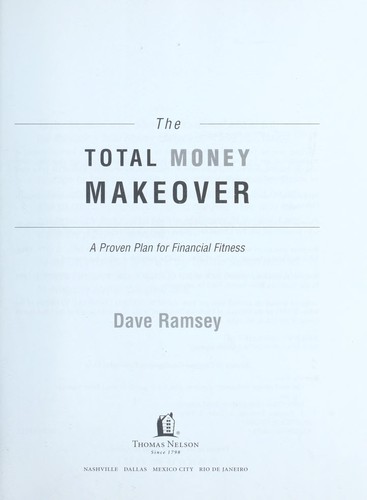
Households in active consumer-debt distress who need a non-negotiable shared script. Not for investors already past B…
Buy on Amazon →About Krefetz Gerald
Read more from Krefetz Gerald and explore the full bibliography on ClearValue Books.
View Krefetz Gerald's page →Get an email if our take on How to pay for your children's college education changes.
We re-review our picks. We'll email you if How to pay for your children's college education's ranking or review changes — no checking back.
Across the site
Featured in lists

Ready to read How to pay for your children's college education?
Buy the edition we recommend on Amazon.
Buy on Amazon →