

Mind over money

Curated by Brian Kim, CPA — every pick gets a plain-English summary and the key takeaways.
Brian Kim, CPA · 2.89M YouTube Subscribers →What this book actually teaches
- 01Loss aversion means people feel financial losses roughly twice as intensely as equivalent gains, which distorts investment and spending decisions.
- 02Mental accounting — treating money differently based on its source or intended use — leads to predictable inconsistencies in financial behavior.
- 03Payment method matters: cash spending triggers more psychological pain than card transactions, affecting how much people actually spend.
- 04Large windfalls (lottery wins, inheritances) produce smaller wellbeing improvements than recipients predict, a phenomenon called hedonic adaptation.
- 05The book explains the psychology behind financial irrationality but offers limited structured guidance on correcting it.
What's in this book
Claudia Hammond's Mind Over Money (2016) argues that human beings are systematically irrational about money — not randomly wrong, but predictably wrong in ways that behavioral economics has now mapped with reasonable precision. Hammond, a BBC science journalist, synthesizes decades of psychological and behavioral research to explain why people make financial decisions that contradict their own stated interests, and what that research can tell us about spending, saving, borrowing, and giving.
The book builds its case across several clusters of findings. First, it covers loss aversion and mental accounting — the documented tendency to feel losses roughly twice as acutely as equivalent gains, and to treat money differently depending on its mental "bucket" (windfall versus earnings, for example). Daniel Kahneman and Amos Tversky's prospect theory is the intellectual backbone here, and Hammond explains it accessibly without oversimplifying. Second, it digs into the psychology of pricing and spending: why people pay more when a menu lists prices without dollar signs, why round numbers anchor negotiations, and why paying in cash genuinely hurts more than swiping a card. Third, the book examines the relationship between money and happiness — a topic where the research has been significantly refined since the original Easterlin paradox debates — and the research on why large windfalls (lottery wins, inheritances) tend to produce smaller wellbeing gains than anticipated. Fourth, Hammond looks at social money dynamics: how people handle splitting bills, negotiating salaries, discussing wealth with family, and why money conversations remain taboo in ways that other sensitive topics have ceased to be.
This is aimed at educated general readers who want to understand why they behave the way they do around money. It is not a how-to personal-finance book; it is an explanation of the cognitive machinery that makes standard personal-finance advice so hard to follow.
The weaknesses are real. Hammond is a journalist rather than a researcher, and the book is more survey than synthesis — it moves from finding to finding without building a unified framework for changing behavior. Some of the studies cited were published before the replication crisis in psychology shook out a number of classic behavioral findings, and readers should hold the specific effect sizes loosely. The book is also more descriptive than prescriptive: it explains what goes wrong with money cognition but provides limited structured guidance on what to do about it.
Worth reading as a well-organized tour of behavioral-finance concepts for someone who wants to understand the psychological layer under their financial decisions. Pair it with a more action-oriented personal-finance title for the practical side.
Read next

For anyone whose financial education was "get a good job and save" — the book is most valuable for first-time readers…
Buy on Amazon →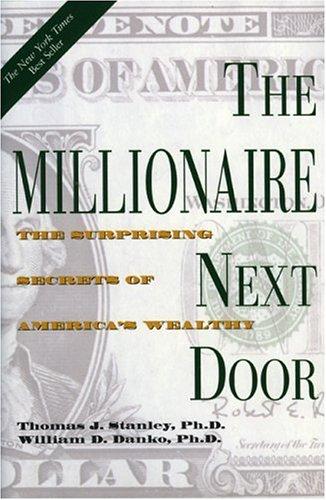
For anyone who confuses high income with wealth, or who feels behind because their lifestyle doesn't look like the we…
Buy on Amazon →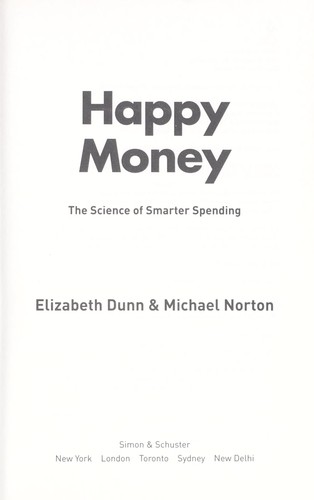
Anyone who earns enough to make discretionary spending choices but suspects their spending is not generating proporti…
Buy on Amazon →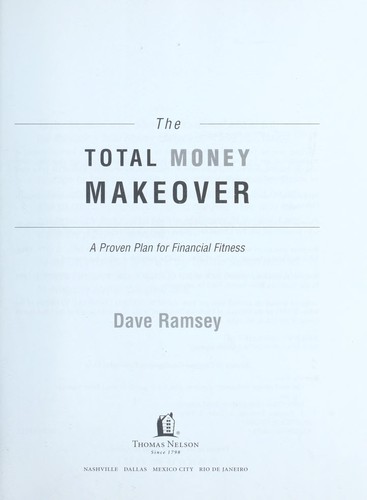
Households in active consumer-debt distress who need a non-negotiable shared script. Not for investors already past B…
Buy on Amazon →About Claudia Hammond
Read more from Claudia Hammond and explore the full bibliography on ClearValue Books.
View Claudia Hammond's page →Get an email if our take on Mind over money changes.
We re-review our picks. We'll email you if Mind over money's ranking or review changes — no checking back.
Across the site
Featured in lists
- Best Trading Psychology Books (2026) (#1 pick)
- The Best Behavioral Finance Books (#5 pick)
