

The $1,000 Challenge

Curated by Brian Kim, CPA — every pick gets a plain-English summary and the key takeaways.
Brian Kim, CPA · 2.89M YouTube Subscribers →What this book actually teaches
- 01The category-by-category approach forces explicit acknowledgment of what each spending area costs and what it's actually worth — which vague "spend less" advice avoids.
- 02O'Connor reports real dollar amounts and real results, including what he couldn't bring himself to cut, which makes the book more credible than self-help success narratives.
- 03The grocery chapter's systematic brand comparison and unit-pricing analysis is one of the more actionable sections.
- 04The $1,000 monthly target is anchored to O'Connor's specific household — readers should recalibrate to their own income level and spending profile rather than treat it as universal.
- 05The narrative structure makes it readable but loosely organized; pair with a structured budgeting framework for implementation.
What's in this book
Brian J. O'Connor's The $1,000 Challenge (2013) is a personal finance book built around a specific experiment: O'Connor, a personal finance columnist for The Detroit News, spent twelve weeks systematically cutting $1,000 per month from his family's budget — not by making general sacrifices, but by attacking one spending category per week with full transparency about what worked and what didn't. The book's argument is that vague budget advice ("spend less") fails because it doesn't tell people where to cut, while the category-by-category approach forces honest accounting of what each spending category actually costs and what it's actually worth to the household.
The structure mirrors the experiment: each chapter covers a week and a category. O'Connor works through groceries, insurance, utilities, entertainment, clothing, subscriptions, transportation costs, and eating out, among others. The strength of the approach is specificity — he reports actual dollar amounts, actual tactics used, actual results, and what he couldn't bring himself to cut. The grocery chapter is one of the better sections: O'Connor documents a systematic comparison of store brands versus name brands, the math on unit pricing, and the specific shopping pattern changes that reduced his family's grocery bill. The insurance chapter walks through the process of actually calling insurers, comparing quotes, and the gap between what people assume their rates are versus what's available. The utilities section covers the basic audit that most households skip — killing phantom loads, adjusting thermostat schedules, auditing streaming and service subscriptions before they became a ubiquitous category.
This is aimed at middle-income households that spend without much category-level visibility and want a structured, honest approach to finding room in the budget without making sacrifices that feel intolerable.
The weaknesses are worth naming. The $1,000 figure is tied to O'Connor's specific income level and household structure — readers with significantly different incomes or spending patterns will need to scale the categories differently, and the implicit assumption is a suburban two-income household with a mortgage. Some chapters produce modest savings that don't generalize (the dry cleaning chapter, for instance, is thin). The book was published in 2013, and some subscription and insurance market comparisons are dated, though the analytical approach transfers. The narrative structure — journalist documents his own experiment — creates genuine readability but also means the prescriptions are loosely organized compared to more structured personal finance manuals.
Worth reading as a practical, honest account of where budget cuts actually come from and what they cost in effort and discomfort — useful as a complement to more prescriptive budgeting frameworks.
Read next

For anyone whose financial education was "get a good job and save" — the book is most valuable for first-time readers…
Buy on Amazon →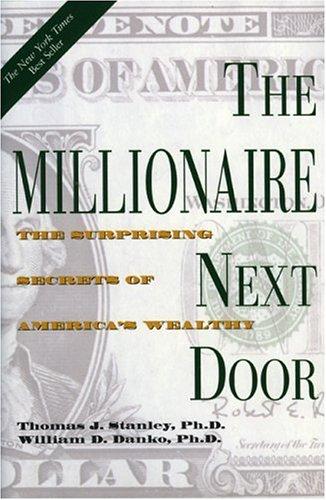
For anyone who confuses high income with wealth, or who feels behind because their lifestyle doesn't look like the we…
Buy on Amazon →
Anyone who earns enough to make discretionary spending choices but suspects their spending is not generating proporti…
Buy on Amazon →
Households in active consumer-debt distress who need a non-negotiable shared script. Not for investors already past B…
Buy on Amazon →How The $1,000 Challenge stacks up
About Brian J O Connor
Read more from Brian J O Connor and explore the full bibliography on ClearValue Books.
View Brian J O Connor's page →Get an email if our take on The $1,000 Challenge changes.
We re-review our picks. We'll email you if The $1,000 Challenge's ranking or review changes — no checking back.
Across the site
Featured in lists
Compared with

Ready to read The $1,000 Challenge?
Buy the edition we recommend on Amazon.
Buy on Amazon →