

The money code

Curated by Brian Kim, CPA — every pick gets a plain-English summary and the key takeaways.
Brian Kim, CPA · 2.89M YouTube Subscribers →What this book actually teaches
- 01Duran's "life-centered financial planning" starts with what you want your life to look like — three purposes (security, freedom, commitment) — before touching numbers.
- 02The "money mind" framework identifies five dominant orientations toward money that explain why identical balance sheets produce different decisions.
- 03The book's dual structure — a business parable plus explanatory chapters — works better read selectively; the explanatory chapters carry the argument.
- 04Five financial decisions (where to live, how to work, risk, investing, giving) connect the life-purpose framework to concrete planning choices.
- 05The investment advice is intentionally vague; the book is positioning for a wealth management relationship, not substituting for one.
What's in this book
Joe Duran's central argument in The Money Code is that most financial planning fails not because it gets the math wrong but because it starts in the wrong place. Standard planning begins with money — what you have, what you earn, what you should invest in — and treats goals as a secondary input. Duran inverts this. The real starting point, in his framing, is what you actually want your life to look like. Money is a tool; the plan is to figure out what you're using the tool for before you pick it up.
Duran, the founder of United Capital, delivers this through a dual structure: a business parable about a man named Jake who inherits a mentor and a journal called "the money code," interwoven with direct explanatory chapters that unpack the framework in plain terms. The parable is a vehicle, not the content — readers who skim to the explanatory chapters will not miss much of the intellectual argument. The core framework, which Duran calls "life-centered financial planning" or "LifeLines," organizes every financial decision around three life purposes: security (not worrying), freedom (having choices), and commitment (giving to what matters). Every dollar an individual spends or saves serves one of those three purposes, and the goal is alignment — your money moving in the direction of the life you actually want.
Beyond the framework, Duran argues that people carry one of five "money minds" — the fear of running out, the belief that money is a measure of success, the desire for freedom, the instinct to give, and the conviction that money is simply a practical tool. Identifying your dominant money mind explains why two people with identical balance sheets make completely different financial decisions. The planning work is to understand your own default wiring and build a plan that accounts for it rather than pretending you're a fully rational economic actor.
The practical application is organized around what Duran calls the "five financial decisions" — where to live, how to work, how to protect against risk, how to invest, and how to give. Each one gets a chapter that ties the life-purpose framework back to concrete planning choices.
The natural audience is people in or approaching their peak earning years who feel financially stuck despite doing most of the standard things right — saving, investing, carrying insurance — and can't explain why the picture still feels incomplete.
The weaknesses are real. The parable format dilutes the intellectual density; readers who want a rigorous planning framework get a business fable padded around the edges. Duran is the CEO of a wealth management firm, and the life-centered approach dovetails neatly with the kind of ongoing, comprehensive planning relationships his business sells — the conflict of interest is not declared but it is present. The investment advice is generic and deliberately vague, because the book is positioning for a relationship, not replacing one. And the money-mind taxonomy, while intuitively appealing, is not backed by the kind of psychometric rigor that Daniel Kahneman's or Richard Thaler's frameworks carry.
Worth reading for the reframe: starting with life design before building a financial plan is a genuinely useful inversion. Not the book for someone who wants a concrete portfolio strategy or a step-by-step savings system.
Read next

For anyone whose financial education was "get a good job and save" — the book is most valuable for first-time readers…
Buy on Amazon →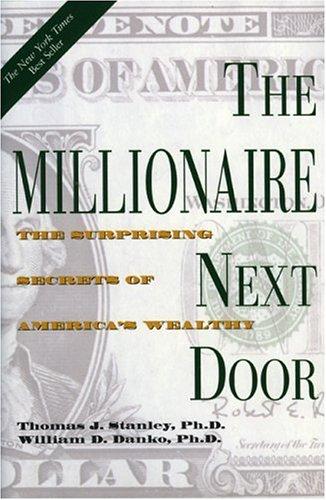
For anyone who confuses high income with wealth, or who feels behind because their lifestyle doesn't look like the we…
Buy on Amazon →
Anyone who earns enough to make discretionary spending choices but suspects their spending is not generating proporti…
Buy on Amazon →
Households in active consumer-debt distress who need a non-negotiable shared script. Not for investors already past B…
Buy on Amazon →About Joe Duran
Read more from Joe Duran and explore the full bibliography on ClearValue Books.
View Joe Duran's page →Get an email if our take on The money code changes.
We re-review our picks. We'll email you if The money code's ranking or review changes — no checking back.
Across the site
Featured in lists
- The Best Financial Psychology Books (#4 pick)
