

The secret life of money

Curated by Brian Kim, CPA — every pick gets a plain-English summary and the key takeaways.
Brian Kim, CPA · 2.89M YouTube Subscribers →What this book actually teaches
- 01Crawford examines money's ritual and sacred dimensions across cultures — potlatch ceremonies, votive offerings, ancestor veneration — arguing that the non-economic relationship between humans and wealth long predates modern currency and persists in contemporary financial behavior.
- 02The inheritance section is among the book's most practically resonant: Crawford treats it not just as an asset transfer but as a charged relational event that activates unresolved family dynamics and transmits behavioral and attitudinal financial patterns across generations.
- 03The Midas myth and its variants serve as a recurring framework for the human tendency to confuse wealth accumulation with fulfillment — a psychological pattern the book examines historically rather than prescriptively.
- 04The book provides no budgeting, investing, or debt management guidance — it is a cultural history and psychological examination of money, not a personal finance guide; readers wanting actionable tools need additional resources.
- 05The behavioral economics literature (Kahneman, Thaler) that developed after 1994 provides more empirical grounding for many of the same patterns Crawford describes through mythology and anthropology — the two are complementary rather than alternatives.
What's in this book
The Secret Life of Money by Tad Crawford, published in 1994, is an examination of money's psychological, anthropological, and mythological dimensions — not a personal finance guide but a cultural history of what money means, how humans have related to it across civilizations, and why it carries emotional weight that its function as a medium of exchange does not fully explain. Crawford, an attorney and publisher who has written on creativity and the arts, argues that money has a secret life that operates below the surface of economic transactions and that shapes individual behavior in ways that conscious financial planning typically ignores.
Crawford draws on mythology, anthropology, psychology, and history to trace the symbolic dimensions of money across cultures. He examines the relationship between money and sacrifice in ancient economies — the votive offerings, the tithes, the ritual destructions of wealth (the potlatch ceremonies of Pacific Northwest indigenous cultures, the burning of paper money in Chinese ancestor veneration) — arguing that the ritual relationship between humans and wealth long predates modern currency and that it persists in contemporary behavior in transformed but recognizable forms. The connection between money and the sacred — the gold standard's psychological resonance, the iconography on currency, the architecture of banks as secular temples — is one of the book's recurring threads.
The psychological sections examine money's role in family systems: how wealth (and poverty) are transmitted across generations not just materially but as behavioral and attitudinal patterns, how money becomes a vehicle for power, love, control, and punishment within families, and how adult financial behavior reflects family-of-origin dynamics that were never explicitly taught. Crawford's treatment of inheritance — not just as an asset transfer but as a charged relational event that activates unresolved family dynamics — is one of the book's most practically resonant sections for contemporary readers.
Crawford also examines the psychology of financial loss: how people respond to windfalls and losses in ways that violate the rational actor model, the emotional meaning of bankruptcy and financial failure that goes beyond the material consequences, and the cultural shame attached to poverty and financial distress that affects how people seek help and make decisions under financial stress. The Midas myth and its variants serve as a recurring reference point for the human tendency to confuse wealth accumulation with fulfillment.
This is for readers who are interested in understanding why they behave financially the way they do — particularly those who have found that knowing the right moves financially has not been sufficient to make them — and who are drawn to cultural history, psychology, and mythology as explanatory frameworks.
The weaknesses are utility and period. The book provides no financial planning guidance; it does not address budgeting, investing, debt reduction, or any practical money management topic. For readers wanting to understand money's cultural and psychological dimensions as a precursor to examining their own behavior, it is valuable — for readers wanting actionable guidance, it is not the right starting point. The 1994 publication date predates the behavioral economics literature that later formalized many of the patterns Crawford describes through a more rigorous empirical framework; readers interested in the scientific version of some of the same observations will find Kahneman's Thinking, Fast and Slow or Thaler and Sunstein's Nudge more current and more empirically grounded. Some of the anthropological framing reflects academic conventions of the early 1990s that have since been updated.
For readers curious about why money means more than money — why financial decisions are rarely purely rational, why inherited attitudes toward wealth are so persistent, and what the mythological and anthropological record reveals about money's emotional dimensions — The Secret Life of Money covers that ground in a way few books do, even if the behavioral economics literature has since provided a more empirical lens on many of the same phenomena.
Read next

For anyone whose financial education was "get a good job and save" — the book is most valuable for first-time readers…
Buy on Amazon →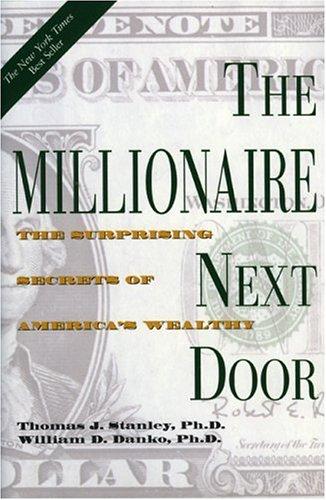
For anyone who confuses high income with wealth, or who feels behind because their lifestyle doesn't look like the we…
Buy on Amazon →
Anyone who earns enough to make discretionary spending choices but suspects their spending is not generating proporti…
Buy on Amazon →
Households in active consumer-debt distress who need a non-negotiable shared script. Not for investors already past B…
Buy on Amazon →About Tad Crawford
Read more from Tad Crawford and explore the full bibliography on ClearValue Books.
View Tad Crawford's page →Get an email if our take on The secret life of money changes.
We re-review our picks. We'll email you if The secret life of money's ranking or review changes — no checking back.
Across the site
Featured in lists
- The Best Financial Psychology Books (#2 pick)
Recommended in answers

Ready to read The secret life of money?
Buy the edition we recommend on Amazon.
Buy on Amazon →