
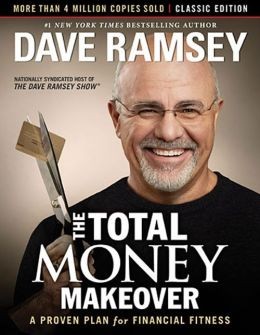
The Total Money Makeover

Curated by Brian Kim, CPA — every pick gets a plain-English summary and the key takeaways.
Brian Kim, CPA · 2.89M YouTube Subscribers →What this book actually teaches
- 01Personal finance is 80% behavior and 20% knowledge — the debt snowball's smallest-balance-first sequencing is intentionally suboptimal mathematically but behaviorally superior because visible wins keep people in the plan.
- 02The Baby Steps are a sequential framework, not a buffet: each step creates the financial and psychological precondition for the next, and skipping steps undermines the system.
- 03Debt normalization — accepting car loans, credit card balances, and student loans as permanent features of adult financial life — is the core mindset Ramsey argues must change before any tactical plan can work.
- 04A $1,000 starter emergency fund is sized deliberately: large enough to absorb a minor emergency without new debt, small enough to complete in weeks and generate early momentum.
- 05The 12% average annual return projection embedded in the investment chapters is a gross historical figure that does not adjust for fees, taxes, or the sequence-of-returns risk that affects accumulation timelines.
What's in this book
The Total Money Makeover by Dave Ramsey, first published in 2003 and revised through multiple editions, is the definitive statement of Ramsey's financial philosophy: that personal finance is 80% behavior and 20% knowledge, that debt is the primary obstacle between most Americans and financial security, and that the path out runs through a specific seven-step sequence that must be followed in order. It is one of the best-selling personal finance books in American publishing history and the canonical text for the Ramsey Solutions ecosystem.
The book's thesis is that most American households are broke not because they don't earn enough but because they have normalized debt — car loans, credit cards, student loans, home equity lines — as a permanent feature of adult financial life. Ramsey's argument is that this normalization is marketed by financial institutions that profit from it and accepted by consumers who confuse debt payments with wealth-building. His counter-argument: debt-free is a condition, not a temporary state between loans, and families that achieve it and maintain it build wealth at rates that debt-carrying families cannot match.
The Baby Steps framework is the book's organizing structure. Step 1 is a $1,000 starter emergency fund — small enough to complete quickly, large enough to prevent a minor emergency from sending a debt-payoff plan into credit card debt. Step 2 is the debt snowball: list all non-mortgage debts from smallest to largest balance, pay minimums on all but the smallest, and attack the smallest with every available dollar. When the smallest balance reaches zero, roll that payment into the minimum on the next smallest and repeat. Step 3 expands the emergency fund to three to six months of expenses. Steps 4, 5, and 6 address retirement investing, college funding, and mortgage payoff. Step 7 is wealth building and giving.
Ramsey is explicit that the debt snowball is not mathematically optimal — paying the highest-interest debt first produces a lower total interest cost. His defense of the smallest-balance-first sequence is behavioral: people who eliminate debts one by one generate momentum and psychological wins that keep them in the plan, while people who spend years attacking a high-balance student loan without visible progress abandon the plan before it produces results. The tradeoff is real and intentional.
The book's motivational architecture is as important as its financial content. Ramsey writes in the voice of a recovered debtor who lost everything and rebuilt — he filed bankruptcy in the late 1980s and rebuilt a net worth from scratch — and the book reads as a conversion narrative as much as a how-to guide. The intensity is deliberate: Ramsey's view is that financial change requires an emotional commitment, not just a spreadsheet.
Who this is for: adults carrying consumer debt — credit cards, car loans, student loans — who want a structured, sequential framework for eliminating it and a motivational account of why it matters. Particularly effective for readers who have tried to manage debt before without a system and found the process demoralizing.
Weaknesses
the absolute debt avoidance position does not differentiate between high-cost consumer debt and low-rate assets like a fixed-rate mortgage during a period of strong investment returns — the opportunity cost of paying off a 3% mortgage faster than necessary while avoiding stock market exposure is significant and not addressed. The investment advice — 12% average annual return is achievable, spread across four mutual fund categories — is optimistic and uses gross historical averages rather than risk-adjusted or fee-adjusted projections. The 2003 framing predates income share agreements, zero-interest promotional financing that can be rational, and the evolved student loan landscape.
Verdict
the most behaviorally effective debt-payoff framework in print, and worth reading for the Baby Steps structure alone — apply with awareness that the investment projections are optimistic and that some absolute positions warrant context-specific modification.
Read next

For anyone whose financial education was "get a good job and save" — the book is most valuable for first-time readers…
Buy on Amazon →
For anyone who confuses high income with wealth, or who feels behind because their lifestyle doesn't look like the we…
Buy on Amazon →
Anyone who earns enough to make discretionary spending choices but suspects their spending is not generating proporti…
Buy on Amazon →
Households in active consumer-debt distress who need a non-negotiable shared script. Not for investors already past B…
Buy on Amazon →About Dave Ramsey
Read more from Dave Ramsey and explore the full bibliography on ClearValue Books.
View Dave Ramsey's page →Get an email if our take on The Total Money Makeover changes.
We re-review our picks. We'll email you if The Total Money Makeover's ranking or review changes — no checking back.

Ready to read The Total Money Makeover?
Buy the edition we recommend on Amazon.
Buy on Amazon →