

Cold hard truth on family, kids & money

Curated by Brian Kim, CPA — every pick gets a plain-English summary and the key takeaways.
Brian Kim, CPA · 2.89M YouTube Subscribers →What this book actually teaches
- 01O'Leary's central argument is that children learn financial behavior by observation and early experience rather than instruction, and that parents who shield children from money conversations and spending consequences produce adults who are poorly equipped for financial independence.
- 02The earned allowance framework — tying allowances to household contributions rather than giving them unconditionally — is O'Leary's most practically specific recommendation for early financial education, and he sequences age-appropriate financial responsibilities from savings goals for young children through credit card education before college.
- 03The college financing section makes the case for evaluating degree programs by return on investment — community college, in-state schools, and high-earning programs are framed as financial decisions rather than social choices, with specific caution around parental co-signing of student loans.
- 04The estate planning chapters address incentive trusts and phased distributions as tools to structure inheritance so that wealth transfer reinforces rather than undermines heirs' financial development — the treatment is conceptual rather than legally precise, but the tool categories are real.
- 05The book's financial advice is calibrated primarily to upper-middle-class and wealthy families — the estate planning focus in particular assumes substantial accumulated wealth, and median-income households will find the college and adult-child-support guidance more applicable than the inheritance structuring sections.
What's in this book
Cold Hard Truth on Family, Kids & Money (2013) by Kevin O'Leary is the second book in O'Leary's personal finance series, following The Cold Hard Truth on Men, Women & Money. Where the first book addressed individual financial behavior, this one turns to the family as the unit of financial decision-making — and O'Leary's argument is that most families financially underserve their children by prioritizing comfort, conflict-avoidance, and lifestyle maintenance over the habits and frameworks that produce financially capable adults.
O'Leary's core thesis is that children learn financial behavior primarily by observation and early experience rather than by instruction, and that parents who shield children from money conversations, financial stress, and the consequences of spending decisions produce adults who are poorly equipped for financial independence. The book is structured around a series of family financial situations: how to discuss money with children at different developmental stages, how to handle allowances and earned income, how to think about paying for college, how to approach the financially struggling adult child, and how to structure estate planning to support rather than undermine financial responsibility in heirs.
The allowance and early money chapters reflect O'Leary's general philosophy clearly: he argues that earned allowances (tied to household contributions rather than given unconditionally) teach the income-for-effort framework earlier and more effectively than passive transfer. He is specific about age-appropriate financial responsibilities — savings goals for young children, basic budgeting for teenagers, credit card education before college — and the sequencing reflects a genuine developmental framework rather than arbitrary rules.
The college financing section is the book's most practically detailed. O'Leary addresses the student loan burden that has reshaped post-graduation finances for a generation of young adults, makes the case for community college and in-state schools as financial decisions rather than social stigmas, and provides a framework for evaluating the return on investment of specific degree programs — a calculation that was controversial in 2013 but has become more mainstream as student debt outcomes have worsened. His treatment of parental co-signing of student loans is notably cautious.
The estate planning and inheritance chapters are where O'Leary's views are most distinctive and most debated. His argument is that large unconditional inheritances undermine the motivation and financial development of heirs, and that structuring wealth transfer to require earned triggers (financial milestones, matched savings, business success) produces better outcomes for heirs as individuals. The specific structures he discusses — incentive trusts, matched contributions, phased distributions — are real estate planning tools, though the treatment is conceptual rather than legal-technically precise.
The weaknesses are primarily tonal. O'Leary's voice is intentionally blunt, and some readers find the delivery dismissive of the genuine complexity of family financial dynamics — particularly around how to handle financial emergencies involving adult children or aging parents. The financial advice is calibrated to upper-middle-class and wealthy families; the estate planning focus in particular assumes a level of accumulated wealth that makes it less relevant to median-income households. Some specific recommendations (on college choice, on supporting adult children) are more absolute than the evidence would support.
For parents who want a framework for raising financially capable children and a clear-eyed perspective on the family financial decisions — college, inheritance, adult child support — that most personal finance books avoid, O'Leary's book provides a coherent if occasionally overstated argument worth engaging with directly.
Read next

For anyone whose financial education was "get a good job and save" — the book is most valuable for first-time readers…
Buy on Amazon →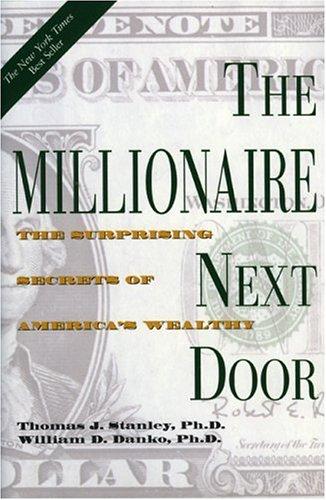
For anyone who confuses high income with wealth, or who feels behind because their lifestyle doesn't look like the we…
Buy on Amazon →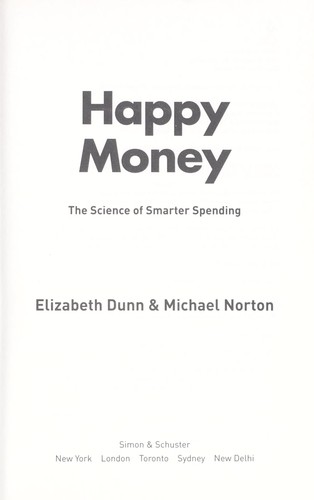
Anyone who earns enough to make discretionary spending choices but suspects their spending is not generating proporti…
Buy on Amazon →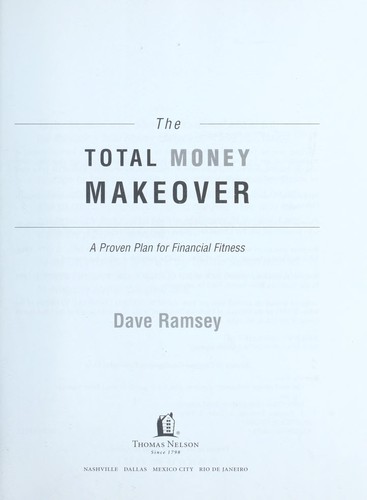
Households in active consumer-debt distress who need a non-negotiable shared script. Not for investors already past B…
Buy on Amazon →About Kevin O Leary 2
Read more from Kevin O Leary 2 and explore the full bibliography on ClearValue Books.
View Kevin O Leary 2's page →Get an email if our take on Cold hard truth on family, kids & money changes.
We re-review our picks. We'll email you if Cold hard truth on family, kids & money's ranking or review changes — no checking back.
Across the site
Featured in lists
Recommended in answers
On Brian's lists

Ready to read Cold hard truth on family, kids & money?
Buy the edition we recommend on Amazon.
Buy on Amazon →