
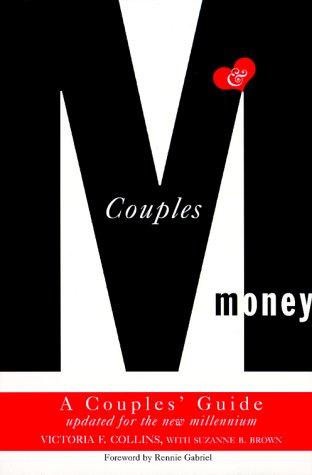
Couples and money

Curated by Brian Kim, CPA — every pick gets a plain-English summary and the key takeaways.
Brian Kim, CPA · 2.89M YouTube Subscribers →What this book actually teaches
- 01The book's central argument is that money conflict in relationships is rarely about money — it is a proxy for deeper disagreements about power, security, values, and control that require addressing both the emotional and structural dimensions simultaneously.
- 02Collins categorizes couples by financial personality combinations — spender-and-saver, controller-and-avoider, risk-tolerant-and-security-focused — and argues each combination requires a distinct set of financial agreements rather than a single system one partner imposes.
- 03The formal household financial meeting is the book's most actionable structural recommendation: a regular, scheduled conversation that moves financial discussion out of reactive, emotionally charged discovery moments into a proactive review format.
- 04The financial personality questionnaires help each partner surface their money history and emotional relationship with money from family of origin, treating conscious awareness of those influences as a precondition for changing how they interact in the partnership.
- 05The joint versus separate account discussion is notably non-prescriptive — Collins presents pooled, separate, and hybrid structures with their practical implications and relational dynamics rather than advocating a single correct answer.
What's in this book
Couples and Money: Why Money Interferes with Love and What to Do About It (1990) by Victoria F. Collins and Suzanne Blair Brown is a financial planning guide built around the premise that money conflict in relationships is rarely about money itself. Collins, a certified financial planner who worked extensively with couples, and Brown, a writer, argue that the financial disagreements that destabilize marriages and long-term partnerships are proxies for deeper conflicts about power, security, values, and control — and that resolving them requires addressing both the emotional and the structural dimensions simultaneously.
The book's central framework distinguishes between the surface-level money fight (who spent what, why was that purchase made without discussion, why is the savings account not growing) and the underlying dynamic it represents. Collins categorizes couples by the financial personality combinations they bring to the relationship — the spender paired with the saver, the financial controller paired with the financial avoider, the risk-tolerant investor paired with the security-focused one — and argues that each combination requires a distinct set of agreements rather than a single financial system that one partner imposes on the other.
The practical structure the book recommends is a formal household financial meeting — a regular, scheduled conversation in which both partners review income, expenses, savings progress, and upcoming financial decisions. Collins argues that most money conflict happens in reactive, emotionally charged moments (discovery of an unexpected expense, a missed bill, a spontaneous purchase) and that a structured meeting format can move financial discussion out of the reactive frame into a proactive one. The meeting structure includes agenda items, a review rhythm, and ground rules designed to keep the conversation financial rather than emotional.
The financial personality assessment chapters include questionnaires designed to help each partner identify their money history and emotional relationship with money — what money meant in their family of origin, what security means to them, what financial autonomy means. Collins's approach here parallels Susan Forward's in Money Demons: both authors argue that adult financial behavior is shaped by childhood money experiences, and that making those influences conscious is a precondition for changing them. The couples context adds a dimension Forward's individual framework does not cover: both partners bring their own money history, and the interaction between two distinct financial personalities creates dynamics neither would produce alone.
The joint versus separate account decision receives extended treatment. Collins does not advocate for a single structure — pooled accounts, separate accounts, or a hybrid — but presents each option with its practical implications and the relational dynamics it tends to produce. The hybrid structure (a joint account for shared expenses, individual accounts for personal spending) is presented as a common solution to autonomy-versus-transparency conflicts, though Collins notes it requires explicit agreement on what counts as a shared expense.
The weaknesses include the 1990 publication date, which means tax figures, investment product references, and some of the institutional assumptions about banking are outdated. The book assumes a heterosexual married couple as the default relationship structure, which limits its applicability without adjustment. The financial personality framework is descriptive rather than validated — the categories are clinically observed rather than empirically derived.
For couples who experience recurring money conflict and recognize that the fights are about something more than the transactions themselves, Couples and Money provides a structured framework for identifying the underlying dynamics and building financial agreements that address them.
Read next

For anyone whose financial education was "get a good job and save" — the book is most valuable for first-time readers…
Buy on Amazon →
For anyone who confuses high income with wealth, or who feels behind because their lifestyle doesn't look like the we…
Buy on Amazon →
Anyone who earns enough to make discretionary spending choices but suspects their spending is not generating proporti…
Buy on Amazon →
Households in active consumer-debt distress who need a non-negotiable shared script. Not for investors already past B…
Buy on Amazon →About Victoria F Collins
Read more from Victoria F Collins and explore the full bibliography on ClearValue Books.
View Victoria F Collins's page →Get an email if our take on Couples and money changes.
We re-review our picks. We'll email you if Couples and money's ranking or review changes — no checking back.
Across the site
Featured in lists
Recommended in answers

Ready to read Couples and money?
Buy the edition we recommend on Amazon.
Buy on Amazon →