

End financial stress now

Curated by Brian Kim, CPA — every pick gets a plain-English summary and the key takeaways.
Brian Kim, CPA · 2.89M YouTube Subscribers →What this book actually teaches
- 01Financial stress is primarily a psychological problem, not an information deficit — most people already know what they should do.
- 02Money scripts, the unconscious beliefs about money formed in childhood, drive adult financial behavior more than rational calculation does.
- 03Behavioral techniques like implementation intentions and tracking without judgment interrupt the anxiety-avoidance cycle that keeps financial problems unsolved.
- 04The book explicitly acknowledges that behavioral fixes cannot substitute for structural economic constraints — an uncommon concession in this genre.
- 05Best used as a companion to standard personal finance frameworks, not a replacement for them — the structural content is basic.
What's in this book
Emily Guy Birken's central argument is that financial stress is not primarily an information problem. Most people know they should spend less and save more. The gap is psychological: anxiety, shame, avoidance, and the cognitive shortcuts that make short-term relief feel more compelling than long-term security. End Financial Stress Now draws on behavioral economics, psychological research, and cognitive-behavioral techniques to address that gap directly.
The book builds in three overlapping layers. First, the diagnostic layer: Birken names the specific mental patterns — present bias, loss aversion, financial avoidance, the money scripts inherited from childhood — that derail rational money decisions even when the rational decision is obvious. She draws on the work of researchers like Brad Klontz on money scripts (the unconscious beliefs about money formed in childhood that persist into adult financial behavior) and uses accessible examples to make the research concrete rather than academic. Second, the behavioral layer: the book gives readers structured exercises for interrupting the anxiety-avoidance cycle — tracking spending without judgment, building a "good enough" financial plan rather than a perfect one, using implementation intentions to convert financial intentions into actual behavior. Third, the structural layer: basic financial hygiene — the emergency fund, automating savings, debt paydown sequencing, the mechanics of retirement accounts — covered not as a primary focus but as the backstop that reduces the occasions for financial anxiety in the first place.
Birken is careful not to pathologize financial stress. She acknowledges that income constraints are real and that behavioral fixes cannot substitute for structural changes — a point too many personal finance authors skip. The tone is consistently low-shame, which is not common in this genre.
The audience is people who have read enough personal finance basics to know what they should do and still find themselves not doing it — particularly readers who experience active anxiety around money rather than just passive disorganization.
The weaknesses are worth noting honestly. The behavioral techniques Birken recommends are real tools with real research backing, but the coverage of each is necessarily shallow for a trade book aimed at a general audience. A reader who wants to go deeper on, say, cognitive-behavioral therapy for anxiety or on behavioral economics as a discipline will outgrow this book quickly. The structural financial content is also standard and could be more compressed — readers who have already internalized the emergency-fund-first, automate-savings framework are not getting new information there. And like most personal finance books with a psychological orientation, it handles low-income or debt-crisis situations more lightly than they deserve.
Worth reading as an entry point for anyone whose relationship with money is more anxious than analytical. For readers who find that knowing the right answer and doing the right thing are different problems, this is a more useful starting point than another budget spreadsheet.
Read next

For anyone whose financial education was "get a good job and save" — the book is most valuable for first-time readers…
Buy on Amazon →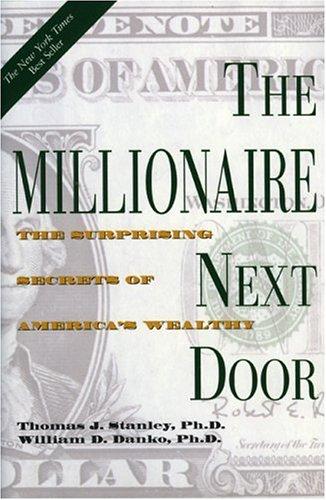
For anyone who confuses high income with wealth, or who feels behind because their lifestyle doesn't look like the we…
Buy on Amazon →
Anyone who earns enough to make discretionary spending choices but suspects their spending is not generating proporti…
Buy on Amazon →
Households in active consumer-debt distress who need a non-negotiable shared script. Not for investors already past B…
Buy on Amazon →About Emily Guy Birken
Read more from Emily Guy Birken and explore the full bibliography on ClearValue Books.
View Emily Guy Birken's page →Get an email if our take on End financial stress now changes.
We re-review our picks. We'll email you if End financial stress now's ranking or review changes — no checking back.

Ready to read End financial stress now?
Buy the edition we recommend on Amazon.
Buy on Amazon →