

Dave Ramsey's Complete Guide to Money: The Handbook of Financial Peace University

Curated by Brian Kim, CPA — every pick gets a plain-English summary and the key takeaways.
Brian Kim, CPA · 2.89M YouTube Subscribers →What this book actually teaches
- 01Personal finance is 80 percent behavior — the Debt Snowball pays smallest balances first because psychological wins beat optimal math.
- 02The seven Baby Steps run in sequence: starter emergency fund → debt snowball → full emergency fund → retirement and college savings → mortgage paydown → wealth building.
- 03Zero-based budgeting means every dollar is assigned a job before the month starts — no unallocated income, no surprise spending.
- 04Ramsey's mutual fund categories exclude index funds; his 12 percent return assumption overstates realistic after-fee, after-inflation expectations.
- 05The system is calibrated for W-2 employees with stable income and consumer debt — it is less precise for high earners, variable-income households, or complex student loan situations.
What's in this book
Dave Ramsey's Complete Guide to Money is the written companion to Financial Peace University, Ramsey's nine-lesson classroom course on personal money management. The book's central argument is that personal finance is 80 percent behavior and 20 percent knowledge — and that the knowledge part is simpler than the financial services industry makes it appear. If you control spending, eliminate debt in a specific sequence, build a cash emergency fund, and invest consistently in mutual funds inside tax-advantaged accounts, ordinary income is sufficient to build genuine wealth over a working lifetime. The system requires no sophistication, no financial advisor selling you products, and no luck.
The book is organized around Ramsey's seven Baby Steps, the structured sequence that forms the backbone of the FPU curriculum. Step 1 is a $1,000 starter emergency fund — not full, just enough to stop reaching for a credit card when something breaks. Step 2 is the Debt Snowball: list all non-mortgage debts smallest to largest, pay minimums on everything, throw every available dollar at the smallest balance until it is gone, then roll that payment to the next. The psychological win of eliminating the smallest debt first is the explicit justification — Ramsey is direct that the math of avalanche ordering (highest interest first) is better on paper and that he is not recommending it anyway, because behavior beats math. Step 3 rebuilds the emergency fund to three to six months of expenses. Steps 4 through 6 run simultaneously: 15 percent of gross income into retirement accounts, college funding via Education Savings Accounts and 529s, and aggressive mortgage paydown. Step 7 is building wealth and giving generously.
Beyond the Baby Steps, the book covers budgeting using the zero-based method (every dollar assigned before the month begins), insurance (Ramsey recommends term life and argues against whole life consistently), home buying (20 percent down, 15-year fixed mortgage, payment no more than 25 percent of take-home), car buying (cash only after the debt snowball), and basic investing principles (diversified growth stock mutual funds across four categories — growth, growth and income, aggressive growth, and international).
The target reader is someone with consumer debt — credit cards, car loans, student loans — and no clear plan for getting out. It works best as a reset document: a complete reorientation toward a system, not as a reference for sophisticated financial questions.
The weaknesses are documented and worth naming. Ramsey's investment advice is narrower than the evidence supports — his four mutual fund categories exclude index funds entirely, and the actively managed funds he implicitly endorses carry higher fees than low-cost index alternatives without consistently beating them. His 12 percent average annual return assumption for planning purposes overstates realistic after-inflation, after-fee expectations. The advice to pay off a mortgage aggressively before investing (Steps 5 and 6 sequenced the way they are) can be suboptimal during periods of low mortgage rates and higher market returns. The system also has known gaps for higher earners, those with variable income, and anyone navigating student loan income-driven repayment — the advice works cleanly for W-2 employees with stable budgets and is less useful at the edges.
For people in debt who need a system, not a spectrum of options, the Baby Steps are a proven framework. For readers already debt-free and looking to optimize, other books serve better.
Read next

For anyone whose financial education was "get a good job and save" — the book is most valuable for first-time readers…
Buy on Amazon →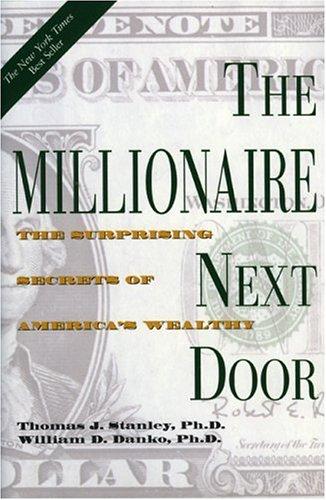
For anyone who confuses high income with wealth, or who feels behind because their lifestyle doesn't look like the we…
Buy on Amazon →
Anyone who earns enough to make discretionary spending choices but suspects their spending is not generating proporti…
Buy on Amazon →
Households in active consumer-debt distress who need a non-negotiable shared script. Not for investors already past B…
Buy on Amazon →About Dave Ramsey
Read more from Dave Ramsey and explore the full bibliography on ClearValue Books.
View Dave Ramsey's page →Get an email if our take on Dave Ramsey's Complete Guide to Money: The Handbook of Financial Peace University changes.
We re-review our picks. We'll email you if Dave Ramsey's Complete Guide to Money: The Handbook of Financial Peace University's ranking or review changes — no checking back.
Across the site
Featured in lists
Recommended in answers
On Brian's lists

Ready to read Dave Ramsey's Complete Guide to Money: The Handbook of Financial Peace University?
Buy the edition we recommend on Amazon.
Buy on Amazon →