◈ The ClearValue Editorial Library

Most money books waste your time. These don't.

Brian Kim, CPA, reads them so you don't have to. You get the plain-English version — what's inside, who it's for, whether it's worth it. One pick at a time.

Brian Kim, CPA

Here's the deal: every pick gets a plain-English summary, the key takeaways, and a score on a published methodology. Brian Kim, CPA, does the reading — you get the verdict.

Brian Kim, CPA · 2.89M YouTube Subscribers →
See our top picks →

500 reviews published

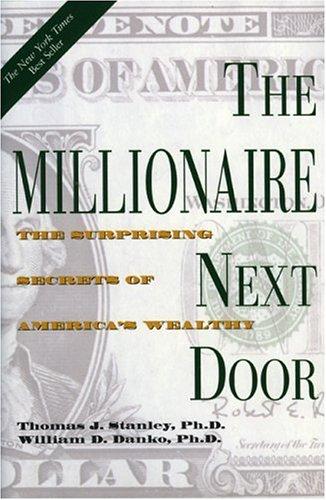
The Psychology of Money coverThe Intelligent Investor coverThe Millionaire Next Door coverThe Total Money Makeover coverDebt-free forever cover

◈ Start Here

Our picks by goal

If you're new to the market

Before you invest

See all 4

If debt is the thing

Get out of debt

See all 5

If you're building something

Start a business

See all 5

◈ Editorial Canon

Essential reading

The finance books that keep earning their place — each with the one thing to take away.

100 Baggers: Stocks That Return 100-to-1 and How To Find Them cover
Our Pick
100 Baggers: Stocks That Return 100-to-1 and How To Find Them
Christopher W Mayer

100-baggers share two engines: businesses that compound earnings at high rates and a valuation re-rating as the market recognizes quality — both are required, neither alone is sufficient.

See the pick →
Expectations Investing cover
#2
Expectations Investing
Michael J Mauboussin

The stock price is a forecast — reading the embedded expectations in a price is more analytically useful than projecting your own earnings estimate in isolation.

See the pick →
The Simple Path to Wealth cover
#3
The Simple Path to Wealth
JL Collins

Your savings rate matters more than your investment returns — financial independence is mostly a function of what you don't spend.

See the pick →
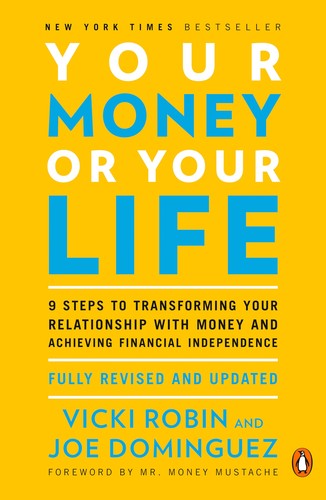
Your Money or Your Life: 9 Steps to Transforming Your Relationship with Money and Achieving Financial Independence cover
#4
Your Money or Your Life: 9 Steps to Transforming Your Relationship with Money and Achieving Financial Independence
Vicki Robin

Money is life energy — every dollar represents hours of life you traded away, and that reframing changes purchasing decisions more than any budget does.

See the pick →
Happy Money cover
#5
Happy Money
Elizabeth Dunn

Buying experiences generates more sustained happiness than buying material goods because experiences are less subject to hedonic adaptation — we stop noticing things, but we continue deriving satisfaction from experiences through memory and anticipation.

See the pick →
Stocks for the Long Run cover
#6
Stocks for the Long Run
Jeremy J Siegel

Siegel's central claim is that over 15-30 year horizons, stocks have been the lowest-risk major asset class in inflation-adjusted terms — bonds have produced negative real returns over long periods in the U.S. record, stocks have not.

See the pick →
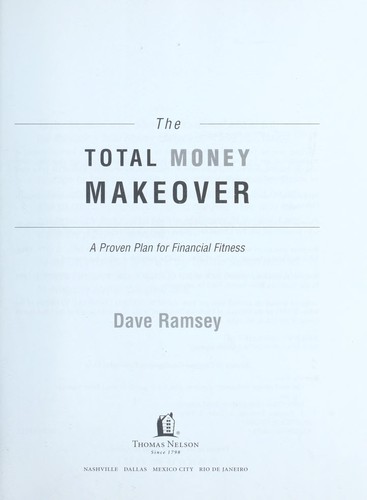
The Total Money Makeover cover
#7
The Total Money Makeover
Dave Ramsey

The seven Baby Steps are a sequence, not a menu — Ramsey's whole argument is that order matters more than optimization.

See the pick →
Think and Grow Rich cover
#8
Think and Grow Rich
Napoleon Hill

Desire in Hill's framework is not vague wishing but a specific, defined-in-dollars goal with a deadline and a plan — the absence of a concrete committed target is Hill's primary explanation for financial underachievement.

See the pick →
Unshakeable cover
#9
Unshakeable
Tony Robbins

Market corrections of 10%+ occur roughly once per year on average and bear markets of 20%+ every three to five years — volatility is a recurring feature of the system, not an anomaly, and every historical instance has been followed by recovery.

See the pick →
One Up On Wall Street cover
#10
One Up On Wall Street
Peter Lynch

Individual investors have a real edge when they invest in companies whose products and end-markets they observe directly.

See the pick →
The Little Book of Common Sense Investing cover
#11
The Little Book of Common Sense Investing
John C. Bogle
See the pick →
Business Model Canvas cover
#12
Business Model Canvas
Alexander Osterwalder

The Business Model Canvas maps any business across nine building blocks — customer segments, value propositions, channels, customer relationships, revenue streams, key resources, key activities, key partnerships, and cost structure — on a single visual page that makes the internal logic of the model legible.

See the pick →

◈ How we choose

Straight answer on how the ranking works: every book gets scored on a published methodology — a plain-English summary, the key takeaways, who it's for. Nobody pays to rank here. Some of the links pay us a small commission if you buy, but that costs you nothing and it moves zero picks. The score does the ranking. Not the commission.

See how we score →

As an Amazon Associate, ClearValue Books earns from qualifying purchases.

Looking for something specific? Browse all books →